
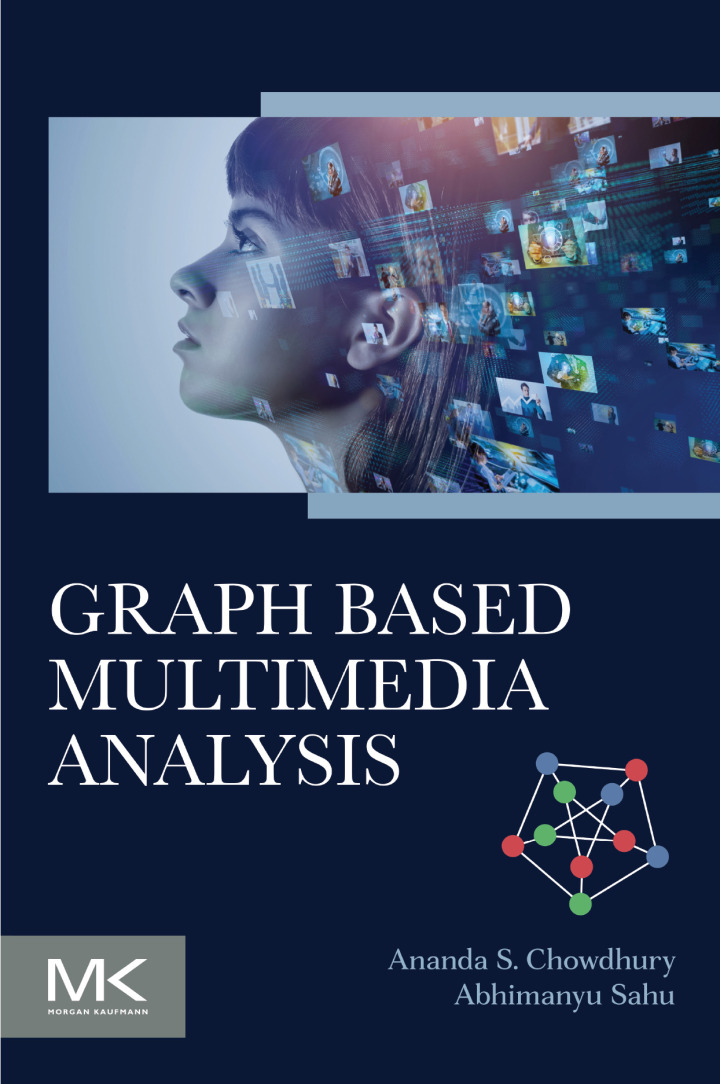
Graph Based Multimedia Analysis – 1st Edition
Original price was: $150.00.$38.00Current price is: $38.00.
Author: Ananda S Chowdhury; Abhimanyu Sahu
Publisher: Morgan Kaufmann
Print ISBN: 9780443214950
Delivery Time: Within 4 hours
Copyright: 2025
500 in stock
- Save up to 60% by choosing our eBook
- High-quality PDF Format
- Lifetime & Offline Access
Graph Based Multimedia Analysis 1st Edition
Capture the future of multimedia intelligence with Graph Based Multimedia Analysis, 1st Edition by Ananda S. Chowdhury and Abhimanyu Sahu. This authoritative text brings together graph theory, signal processing, and machine learning to reveal powerful, scalable methods for analyzing images, video, audio, and multimodal data.
Discover why graph-based approaches are reshaping multimedia processing. The book opens with intuitive explanations of graph representations and graph signal processing, then advances to modern techniques including graph neural networks, spectral methods, and graph-aware feature fusion. Clear examples and algorithmic insight equip readers to model relationships, capture context, and extract richer semantic information from complex datasets.
Ideal for graduate students, researchers, and industry practitioners, this edition balances rigorous theory with practical guidance—covering content-based retrieval, video understanding, social multimedia analysis, recommendation, and real-time analytics. Chapters emphasize performance, scalability, and robustness, showing how graph methods improve retrieval accuracy, reduce noise sensitivity, and enable multimodal integration in real-world systems used across academia and industry worldwide.
Why this book matters: it translates cutting-edge research into usable workflows and code-ready ideas, helping data scientists and engineers deploy graph-based solutions for computer vision, audio analysis, and cross-modal search. Each topic is contextualized with case studies and comparative perspectives that highlight best practices and common pitfalls.
Whether you’re building smarter search engines, robust surveillance analytics, or next-generation recommender systems, Graph Based Multimedia Analysis, 1st Edition is the practical, forward-looking resource you need. Add this essential reference to your library today and start leveraging graph methodologies to unlock deeper insights from multimedia data.
Note: eBooks do not include supplementary materials such as CDs, access codes, etc.