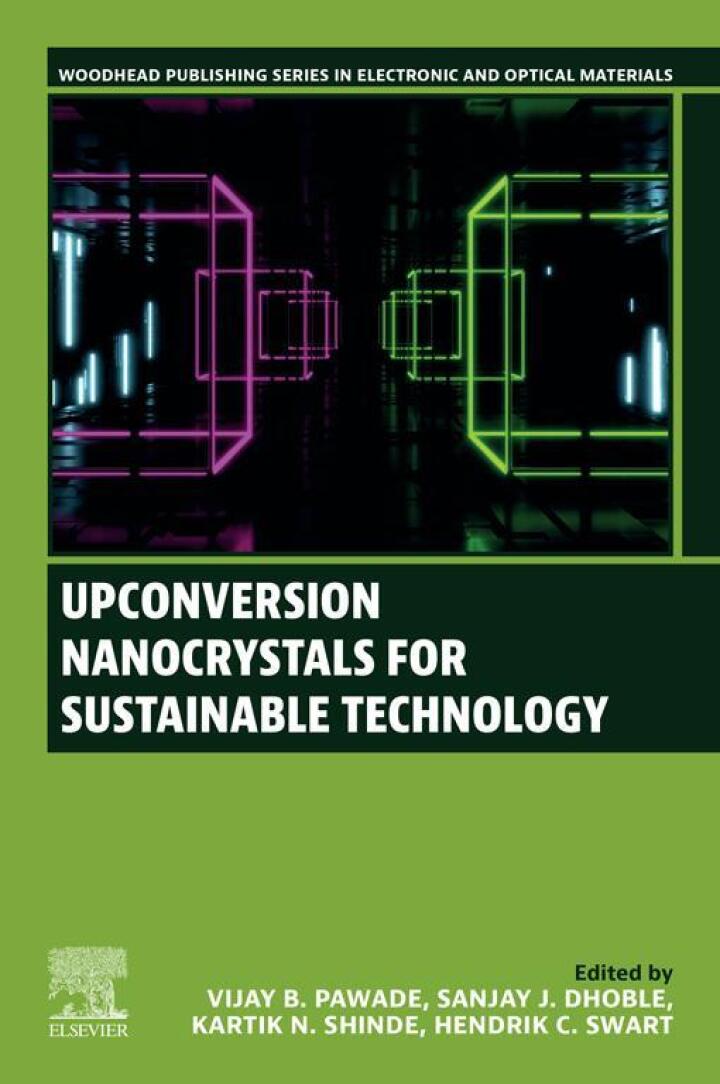
Upconversion Nanocrystals for Sustainable Technology – 1st Edition
Original price was: $245.00.$38.00Current price is: $38.00.
Author: Vijay B. Pawade, Sanjay J. Dhoble, Kartik N. Shinde, Hendrik C. Swart
Publisher: Woodhead Publishing
Print ISBN: 9780443158308
Delivery Time: Within 4 hours
Copyright: 2025
500 in stock
- Save up to 60% by choosing our eBook
- High-quality PDF Format
- Lifetime & Offline Access
Upconversion Nanocrystals for Sustainable Technology 1st Edition
Bold new advances in materials science meet real-world sustainability in Upconversion Nanocrystals for Sustainable Technology, 1st Edition — a definitive guide from experts Vijay B. Pawade, Sanjay J. Dhoble, Kartik N. Shinde, and Hendrik C. Swart. This accessible yet rigorous volume captures the promise of upconversion nanocrystals to transform energy, lighting, sensing and environmental remediation across India, Europe, North America and beyond.
Discover clear explanations of fundamental mechanisms, rare-earth doping strategies, and scalable synthesis routes that make these nanomaterials viable for green applications. The book bridges theory and practice with chapters on characterization techniques, surface engineering, device integration, and lifecycle considerations — essential reading for researchers, engineers, policy makers and advanced students focused on photovoltaics, energy-efficient lighting, photocatalysis and next-generation sensors.
Packed with contemporary case studies and real-world examples, this edition highlights breakthroughs in solar energy harvesting, upconversion-assisted photovoltaics, low-energy solid-state lighting, and sustainable photocatalytic systems that reduce environmental impact. Practical guidance on optimizing performance, cost-effectiveness and environmental safety helps industry professionals translate lab innovation into deployable technologies.
Whether you’re leading R&D in a university lab, developing commercial green technologies, or shaping sustainability policy, this book provides the scientific depth and application-focused insight to accelerate progress. Add Upconversion Nanocrystals for Sustainable Technology, 1st Edition to your technical library to stay at the forefront of materials-driven sustainability — a smart investment for the future of clean energy and sustainable manufacturing. Order now to equip your team with the knowledge to innovate responsibly and competitively.