
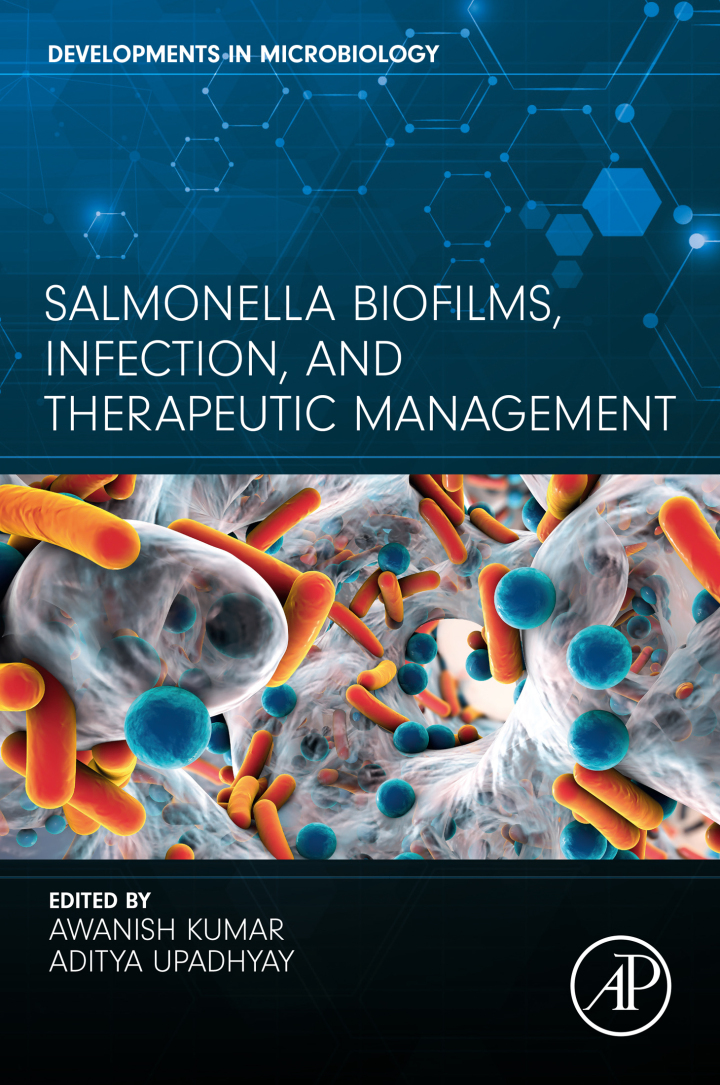
Salmonella Biofilms, Infection, and Therapeutic Management
Original price was: $175.00.$38.00Current price is: $38.00.
Author: Awanish Kumar, Aditya Upadhyay
Publisher: Academic Press
Print ISBN: 9780443220555
Delivery Time: Within 4 hours
Copyright: 2025
500 in stock
- Save up to 60% by choosing our eBook
- High-quality PDF Format
- Lifetime & Offline Access
Salmonella Biofilms, Infection, and Therapeutic Management
Salmonella Biofilms, Infection, and Therapeutic Management by Awanish Kumar and Aditya Upadhyay delivers a sharp, clinically focused investigation into one of microbiology’s most persistent challenges. Combining rigorous science with practical guidance, this book illuminates how Salmonella forms resilient biofilms, evades immunity, and sustains infections that complicate treatment in both community and hospital settings.
Readers will find clear explanations of biofilm physiology, molecular pathways that drive persistence, and the role of biofilms in antimicrobial resistance. The authors synthesize recent research and translate it into actionable insights for clinicians, microbiologists, infection-control teams, and public-health practitioners. Case studies and comparative analyses highlight regional implications—particularly for the Indian subcontinent and other high-burden regions—while maintaining a global perspective on surveillance and outbreak response.
Beyond mechanisms, the book evaluates current and emerging therapeutic management strategies: optimized antimicrobial regimens, biofilm-disrupting agents, novel drug-delivery systems, and integrated prevention approaches spanning food safety to hospital hygiene. Practical diagnostic recommendations and stewardship principles help readers reduce treatment failures and slow resistance trends.
Concise, evidence-based, and accessible, this volume is ideal for infectious-disease specialists, clinical laboratory personnel, epidemiologists, and graduate students seeking a contemporary resource on Salmonella pathogenesis and control. Whether you’re managing clinical cases, designing research, or shaping policy, this book equips you with the knowledge to recognize risks and implement effective interventions.
Strengthen your practice and enhance public-health outcomes with this authoritative guide. Order your copy today to stay at the forefront of Salmonella infection research and therapeutic management strategies.
Note: eBooks do not include supplementary materials such as CDs, access codes, etc.