

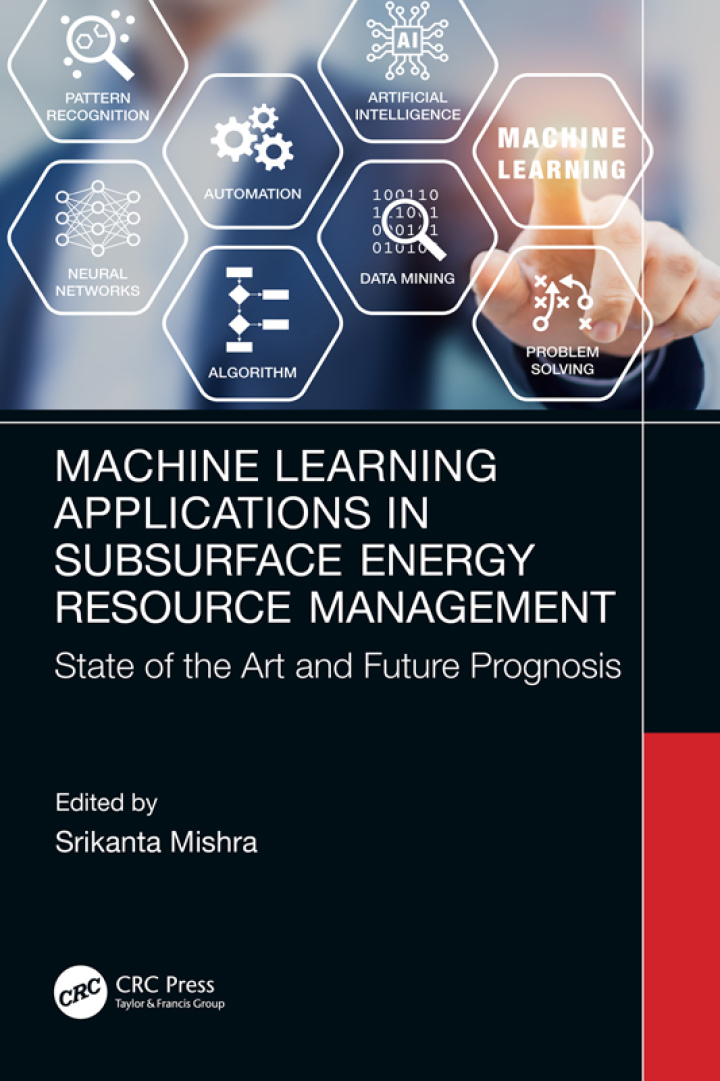
Machine Learning Applications in Subsurface Energy Resource Management – 1st Edition
Original price was: $160.00.$38.00Current price is: $38.00.
Author:
Publisher: CRC Press
Print ISBN: 9781032074528
Delivery Time: Within 4 hours
Copyright: 2023
500 in stock
- Save up to 60% by choosing our eBook
- High-quality PDF Format
- Lifetime & Offline Access
Machine Learning Applications in Subsurface Energy Resource Management 1st Edition
Machine Learning Applications in Subsurface Energy Resource Management, 1st Edition delivers a timely bridge between advanced data science and real-world subsurface challenges. For engineers, geoscientists, data scientists, and energy managers seeking practical, high-impact tools, this book transforms complex machine learning concepts into actionable strategies for exploration, production and carbon management.
Discover clear explanations of state-of-the-art algorithms and workflows tailored to subsurface problems — from seismic interpretation and reservoir characterization to drilling optimization, production forecasting, and CO2 sequestration monitoring. Written with practical applicability in mind, the text emphasizes data preprocessing, feature selection, model validation, and uncertainty quantification to ensure robust, field-ready solutions.
You’ll learn how machine learning improves decision-making across oil & gas, geothermal, and carbon capture projects by reducing risk, lowering operational costs, and accelerating project timelines. Case-focused examples and regional perspectives make the methods relevant to basins in North America, the Middle East, Asia-Pacific and beyond, ensuring global applicability for practitioners and policymakers.
This 1st Edition is both a technical reference and a strategic guide: it equips teams to integrate predictive analytics into subsurface resource workflows, communicate results to stakeholders, and scale pilot projects into operational practice. Clear visuals and stepwise approaches help readers convert theory into measurable performance gains.
Whether you’re advancing a career in geoscience, steering energy projects, or building data-driven teams, Machine Learning Applications in Subsurface Energy Resource Management, 1st Edition is an essential resource to modernize subsurface operations. Add it to your library and start turning data into dependable decisions.
Note: eBooks do not include supplementary materials such as CDs, access codes, etc.
Related Books


Technology & Engineering
Proceedings of Emerging Trends and Technologies on Intelligent Systems