
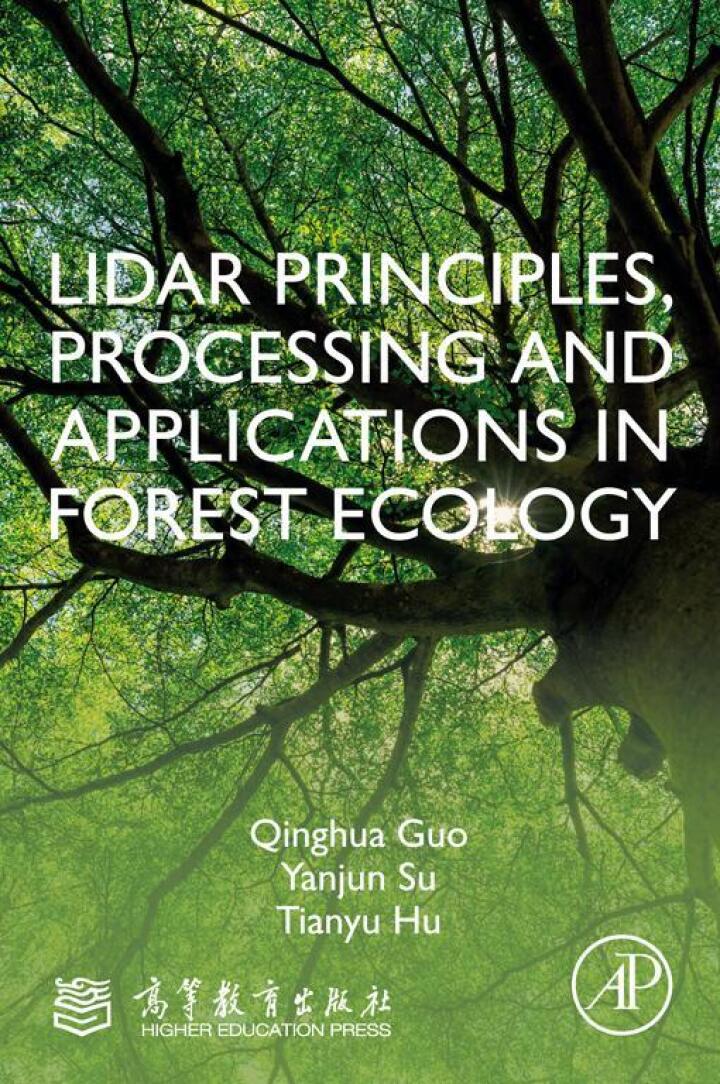
LiDAR Principles, Processing and Applications in Forest Ecology – 1st Edition
Original price was: $200.00.$38.00Current price is: $38.00.
Author: Qinghua Guo; Yanjun Su; Tianyu Hu
Publisher: Academic Press
Print ISBN: 9780128238943
Delivery Time: Within 4 hours
Copyright: 2023
500 in stock
- Save up to 60% by choosing our eBook
- High-quality PDF Format
- Lifetime & Offline Access
LiDAR Principles, Processing and Applications in Forest Ecology 1st Edition
LiDAR Principles, Processing and Applications in Forest Ecology — 1st Edition by Qinghua Guo, Yanjun Su, and Tianyu Hu invites readers into the practical heart of modern forest science. Combining clear theory with applied techniques, this authoritative guide demystifies LiDAR (light detection and ranging) for forest ecologists, remote-sensing specialists, students, and resource managers.
Start with a concise foundation of LiDAR physics and sensor types, then move quickly into hands-on processing: point-cloud cleaning, classification, canopy height modeling, structure metrics, biomass estimation, and change detection. The book balances mathematical rigor with intuitive explanations, making advanced topics like waveform interpretation, data fusion (UAV, airborne, terrestrial), and machine-learning classification accessible without sacrificing depth.
Real-world case studies and regionally relevant examples demonstrate how LiDAR supports forest inventory, carbon assessment, biodiversity monitoring, wildfire risk mapping, and landscape restoration—from temperate and boreal woodlands to tropical forests. Practical workflows and best-practice recommendations ensure you can apply methods to local or continental-scale projects across North America, Europe, Asia, and the tropics.
Whether you’re preparing for field campaigns, building processing pipelines, or interpreting LiDAR outputs for policy and conservation, this book delivers clear instructions, diagnostic tips, and the conceptual tools needed to turn point clouds into reliable ecological insight. Its professional tone and applied focus make it ideal for graduate courses, research teams, and forestry practitioners.
Unlock the potential of LiDAR for modern forest ecology—explore measurement principles, processing techniques, and application strategies in one comprehensive volume. Add LiDAR Principles, Processing and Applications in Forest Ecology to your library and elevate your forest monitoring and management capabilities today.
Note: eBooks do not include supplementary materials such as CDs, access codes, etc.
Related Books


Technology & Engineering
Introduction to Discrete Event Simulation and Agent-based Modeling