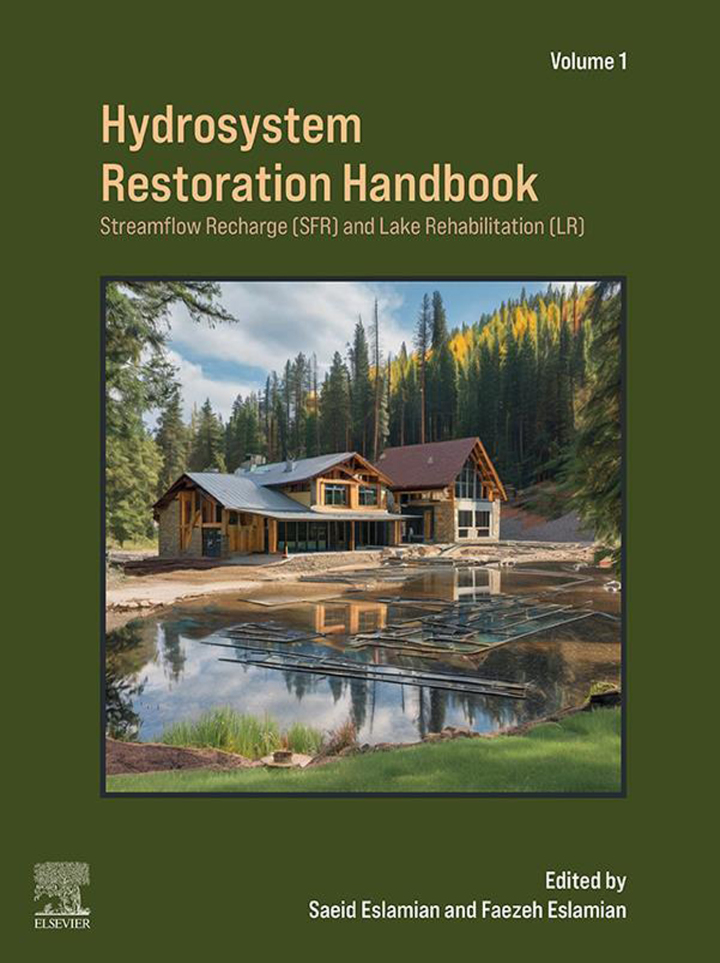
Hydrosystem Restoration Handbook: Streamflow Recharge and Lake Rehabilitation
Original price was: $135.00.$38.00Current price is: $38.00.
Author: Saeid Eslamian; Faezeh Eslamian
Publisher: Elsevier (S&T)
Print ISBN: 9780443298028
Delivery Time: Within 4 hours
Copyright: 2025
500 in stock
- Save up to 60% by choosing our eBook
- High-quality PDF Format
- Lifetime & Offline Access
Hydrosystem Restoration Handbook: Streamflow Recharge and Lake Rehabilitation
Hydrosystem Restoration Handbook: Streamflow Recharge and Lake Rehabilitation by Saeid Eslamian and Faezeh Eslamian is an authoritative, practical guide for engineers, ecologists, water managers, and planners tackling degraded rivers, lakes, and watersheds worldwide. Clear, research-driven, and solutions-focused, this handbook translates hydrology and restoration science into actionable design, monitoring, and policy strategies.
Open with compelling real-world context: the need to restore streamflow, recharge aquifers, and revive lakes is urgent across arid regions, Mediterranean basins, temperate river systems, and rapidly urbanizing catchments. The authors blend hydrological modeling, field-tested rehabilitation techniques, and adaptive management to help professionals restore ecosystem services, improve water security, and enhance biodiversity.
Readers will find step-by-step methods for assessing degraded hydrosystems, designing streamflow recharge interventions, implementing shoreline and wetland rehabilitation, and integrating nature-based solutions with engineered approaches. Case studies span regional and global settings, offering transferable lessons for flood-prone deltas, drought-impacted basins, and urban river corridors. Clear diagrams, practical checklists, and performance metrics guide restoration planning, monitoring, and stakeholder engagement.
Whether you’re restoring a lake in the Mediterranean, recharging streams in arid catchments, or retrofitting urban waterways, this handbook equips you with scientifically grounded tools and policy insights to deliver resilient, sustainable outcomes. Ideal for practitioners, graduate students, and decision-makers, it bridges theory and practice for effective hydrosystem recovery.
Invest in a resource that empowers restoration projects from design to long-term stewardship—order your copy today and start transforming degraded watersheds into thriving, water-secure landscapes.
Note: eBooks do not include supplementary materials such as CDs, access codes, etc.