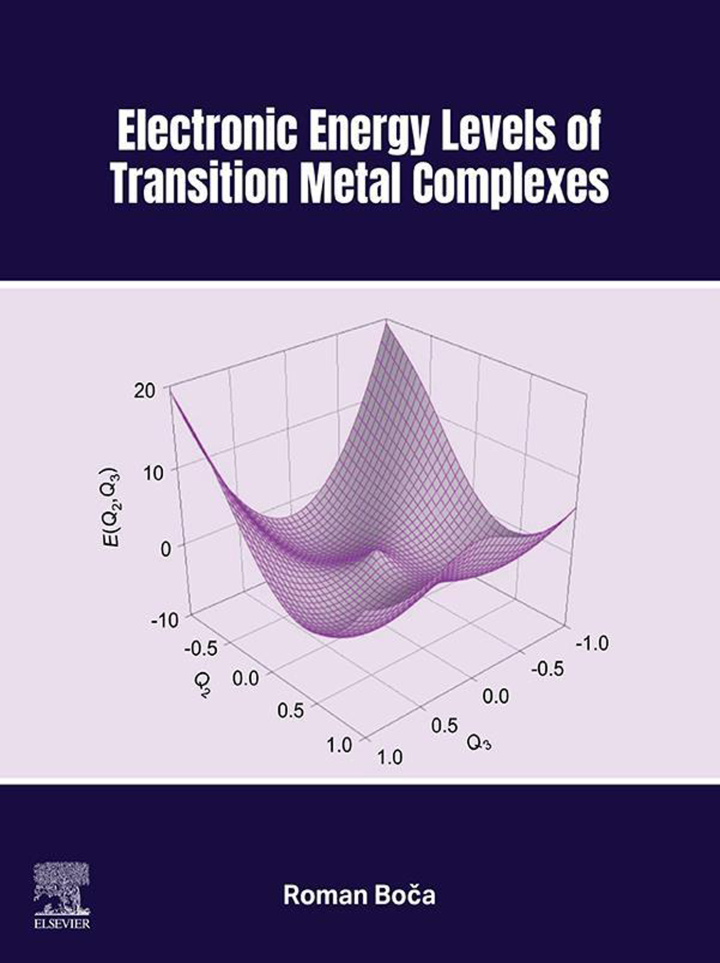
Electronic Energy Levels of Transition Metal Complexes
Original price was: $200.00.$38.00Current price is: $38.00.
Author: Roman Boča
Publisher: Elsevier (S&T)
Print ISBN: 9780443334160
Delivery Time: Within 4 hours
Copyright: 2025
500 in stock
- Save up to 60% by choosing our eBook
- High-quality PDF Format
- Lifetime & Offline Access
Electronic Energy Levels of Transition Metal Complexes
Electronic Energy Levels of Transition Metal Complexes by Roman Boča delivers a rigorous, accessible exploration of the electronic structure that defines the chemistry of transition metal complexes. This authoritative work immediately draws in researchers, graduate students, and advanced undergraduates who need clear, practical insight into how electronic energy levels shape reactivity, spectroscopy, magnetism, and catalysis.
Inside, Boča guides readers through ligand-field and molecular-orbital perspectives, symmetry and crystal-field splitting, electronic transitions, and modern computational approaches such as DFT—each topic tied to real examples and experimentally observable properties. Clear diagrams, worked examples, and comparative analyses bridge theory and practice so learners can predict spectroscopic signatures, rationalize magnetic behavior, and design complexes with targeted electronic characteristics.
Why this book matters: it synthesizes classic inorganic concepts with contemporary computational tools, making it an indispensable reference for inorganic chemists, materials scientists, spectroscopists, and computational chemists. Educators will find reliable classroom material; researchers will appreciate the concise derivations and applied focus that speed problem-solving and research planning.
Globally relevant and academically rigorous, this title supports readers in Europe, North America, Asia-Pacific, and beyond—wherever transition-metal chemistry advances industry and research. Whether you are preparing a seminar, modeling a catalytic site, or teaching advanced inorganic chemistry, Boča’s text is a definitive resource.
Order your copy today to deepen your understanding of electronic energy landscapes and elevate your work in coordination chemistry and materials design.
Note: eBooks do not include supplementary materials such as CDs, access codes, etc.