
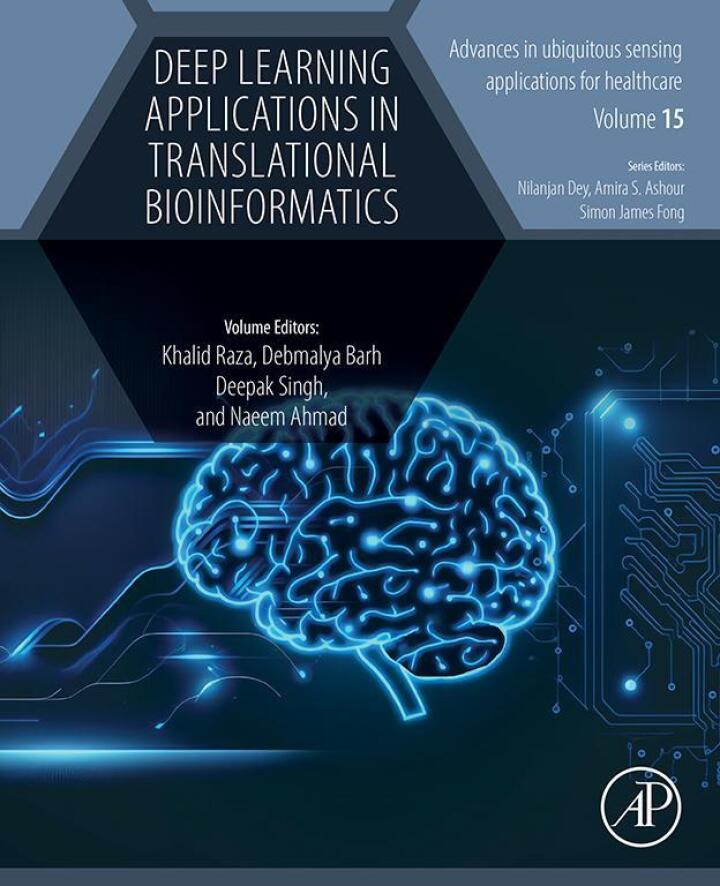
Deep Learning Applications in Translational Bioinformatics – 1st Edition
Original price was: $170.00.$38.00Current price is: $38.00.
Author: Khalid Raza; Debmalya Barh; Deepak Singh; Naeem Ahmad
Publisher: Academic Press
Print ISBN: 9780443222993
Delivery Time: Within 4 hours
Copyright: 2024
500 in stock
- Save up to 60% by choosing our eBook
- High-quality PDF Format
- Lifetime & Offline Access
Deep Learning Applications in Translational Bioinformatics 1st Edition
Grab the future of biomedical discovery with Deep Learning Applications in Translational Bioinformatics (1st Edition) by Khalid Raza, Debmalya Barh, Deepak Singh, and Naeem Ahmad — a definitive guide for researchers, clinicians, and data scientists bridging computational advances and patient care.
This concise yet comprehensive volume introduces core deep learning architectures and maps them directly onto translational bioinformatics challenges: genomic interpretation, biomarker discovery, drug repurposing, imaging-genomics integration, and predictive models for precision medicine. Written by leading experts, the book balances foundational theory with practical case studies, making complex algorithms accessible without sacrificing rigor.
Readers will discover how convolutional and recurrent neural networks, autoencoders, and transfer learning are transforming diagnostics, accelerating biomarker pipelines, and improving clinical decision support. Practical insights guide implementation on real-world datasets common to academic labs, hospitals, and biotech firms across the USA, Europe, Asia, and beyond. Emphasis on reproducible workflows, evaluation metrics, and interpretability ensures relevance for translational teams aiming to move discoveries from bench to bedside.
If you’re a bioinformatician, clinician, graduate student, or industry professional seeking to harness AI for healthcare impact, this book equips you with the tools and perspective to design robust studies, validate models rigorously, and communicate findings to multidisciplinary stakeholders. Clear diagrams, comparative examples, and strategic recommendations make it an essential reference for modern translational research.
Add Deep Learning Applications in Translational Bioinformatics to your library today and accelerate your work at the intersection of machine learning and medicine — a practical, authoritative resource for the next wave of biomedical innovation.
Note: eBooks do not include supplementary materials such as CDs, access codes, etc.