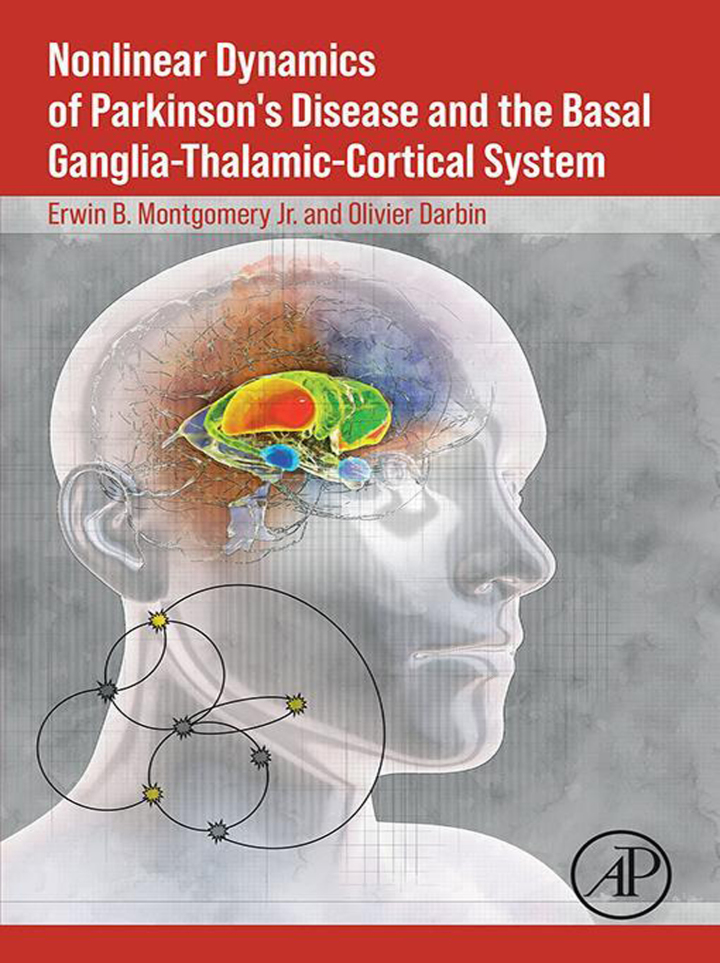
Nonlinear Dynamics of Parkinson’s Disease and the Basal Ganglia-Thalamic-Cortical System – 1st Edition
Original price was: $200.00.$38.00Current price is: $38.00.
Author: Erwin B. Montgomery Jr.; Olivier Darbin
Publisher: Academic Press
Print ISBN: 9780443216992
Delivery Time: Within 4 hours
Copyright: 2023
500 in stock
- Save up to 60% by choosing our eBook
- High-quality PDF Format
- Lifetime & Offline Access
Nonlinear Dynamics of Parkinson’s Disease and the Basal Ganglia-Thalamic-Cortical System 1st Edition
Capture the cutting edge of movement-disorder science with Nonlinear Dynamics of Parkinson’s Disease and the Basal Ganglia-Thalamic-Cortical System, 1st Edition by Erwin B. Montgomery Jr. and Olivier Darbin. This authoritative volume draws together rigorous theory and real-world clinical insight to illuminate how nonlinear dynamical systems shape Parkinson’s disease and its treatments.
This book offers a clear, accessible exploration of the basal ganglia–thalamic–cortical system using mathematical models, computational neuroscience, and translational neuroscience perspectives. Readers will find in-depth analyses of oscillatory activity, network instability, and the mechanisms behind tremor, bradykinesia, and dyskinesia—presented with clinical relevance for neurology, movement-disorder specialists, biomedical engineers, and researchers. Case studies, model comparisons, and step-by-step explanations make complex nonlinear dynamics relatable and practically useful.
Ideal for clinicians, researchers, graduate students, and healthcare innovators worldwide, this edition bridges basic science and clinical application. Learn how advanced modeling informs deep brain stimulation strategies, pharmacological approaches, and the design of next-generation therapies. The book’s balanced focus on theory, experimental data, and translational impact helps you apply insights directly to research design, clinical decision-making, and product development in Parkinson’s care across the US, Europe, Asia, and beyond.
If you seek a comprehensive, modern reference that clarifies how network dynamics drive Parkinson’s symptoms and therapy responses, this is an essential addition to your library. Enhance your understanding of Parkinson’s disease, basal ganglia circuits, and nonlinear systems today—order Nonlinear Dynamics of Parkinson’s Disease and the Basal Ganglia-Thalamic-Cortical System, 1st Edition by Erwin B. Montgomery Jr. and Olivier Darbin, and bring sharper, evidence-based perspective to your work in neuroscience and neurology.