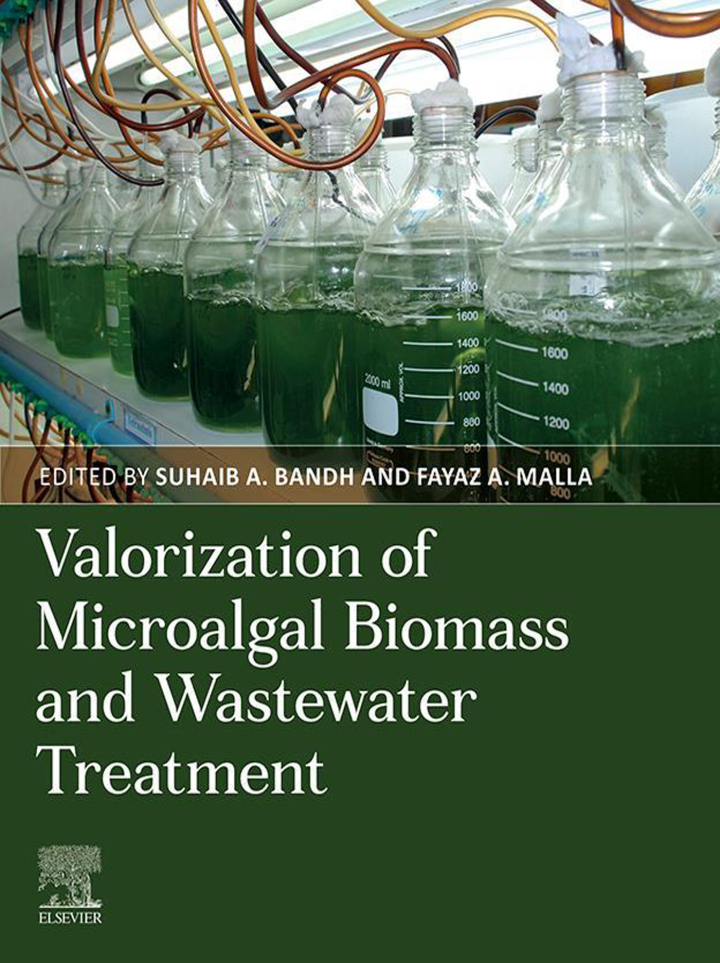
Valorization of Microalgal Biomass and Wastewater Treatment
Original price was: $150.00.$38.00Current price is: $38.00.
Author: Suhaib Bandh and Fayaz Malla
Publisher: Elsevier (S&T)
Print ISBN: 9780323918695
Delivery Time: Within 4 hours
Copyright: 2023
500 in stock
- Save up to 60% by choosing our eBook
- High-quality PDF Format
- Lifetime & Offline Access
Valorization of Microalgal Biomass and Wastewater Treatment
Valorization of Microalgal Biomass and Wastewater Treatment by Suhaib Bandh and Fayaz Malla is a timely, practical guide for scientists, engineers, policymakers and entrepreneurs working at the intersection of sustainable wastewater management and bioresource recovery.
Grab attention with the promise of turning environmental challenge into economic opportunity: this book presents a clear pathway to convert microalgal growth in wastewater into valuable Books—biofuels, bioplastics, animal feed, pigments and nutrient-rich fertilizers—while delivering effective bioremediation. It blends rigorous science with actionable strategies, making it ideal for both academics and industry practitioners.
Dive into authoritative content that explains cultivation techniques, nutrient and heavy-metal removal, harvesting and downstream processing, and techno-economic and life-cycle assessments. Detailed discussions on photobioreactors, open-pond systems, and hybrid treatment configurations equip readers to evaluate options for diverse climates and infrastructures—from municipal plants in Europe and North America to decentralized systems across South Asia and Africa. Case studies and comparative analyses illustrate real-world performance, scalability challenges and regulatory considerations.
Imagine the impact: adopting the approaches in this book can reduce treatment costs, recover resources, and create new revenue streams—helping utilities, startups and policymakers meet circular-economy targets and sustainability goals. The clear illustrations, real-world examples and evidence-based recommendations make complex topics accessible and implementable.
Ready to transform wastewater into value? Whether you’re designing pilot projects, drafting policy, or investigating commercial opportunities, this book is a practical roadmap to sustainable microalgal valorization and advanced wastewater treatment. Add Valorization of Microalgal Biomass and Wastewater Treatment to your professional library and lead the shift toward resilient, resource-efficient water management.
Related Books
Technology & Engineering
Introduction to Discrete Event Simulation and Agent-based Modeling
Technology & Engineering
Proceedings of Emerging Trends and Technologies on Intelligent Systems