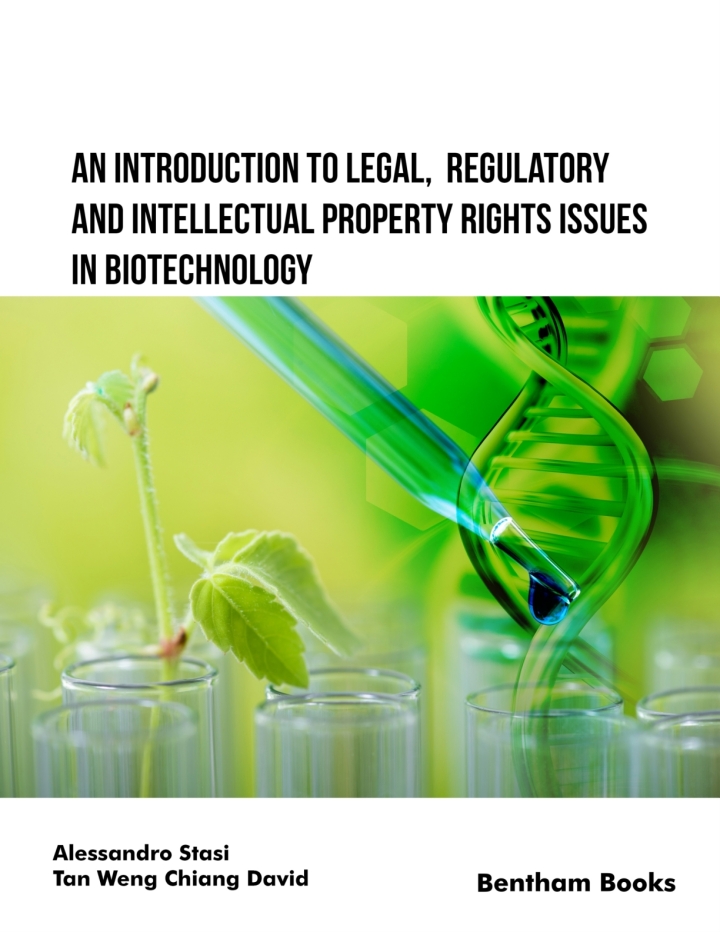
An Introduction to Legal, Regulatory and Intellectual Property Rights Issues in Biotechnology – 1st Edition
Original price was: $49.00.$38.00Current price is: $38.00.
Author: Alessandro Stasi; Tan Weng Chiang David
Publisher: Bentham Science
Print ISBN: 9789815080636
Delivery Time: Within 4 hours
Copyright: 2023
500 in stock
- Save up to 60% by choosing our eBook
- High-quality PDF Format
- Lifetime & Offline Access
An Introduction to Legal, Regulatory and Intellectual Property Rights Issues in Biotechnology 1st Edition
Capture the complexities of modern biotech law with An Introduction to Legal, Regulatory and Intellectual Property Rights Issues in Biotechnology, 1st Edition by Alessandro Stasi and Tan Weng Chiang David. This concise, authoritative guide translates dense legal concepts into accessible guidance for scientists, entrepreneurs, legal practitioners and policymakers navigating the fast-evolving world of biotechnology.
Explore clear explanations of core topics—regulatory pathways, biosafety and bioethics, patenting and trade secrets, licensing and technology transfer, and the intersection of public policy with commercialization. The authors balance legal theory with real-world implications so you can understand how intellectual property rights and regulatory frameworks affect product development, market entry and international collaboration across jurisdictions in the Asia-Pacific, Europe and the Americas.
Designed for readers who need practical knowledge rather than dense legalese, the book highlights compliance strategies, risk management and best practices for protecting innovations in genetic engineering, pharmaceuticals, diagnostics and agricultural biotech. Legal professionals will find concise overviews of patentability standards and enforcement issues; researchers and startup founders will appreciate guidance on licensing, collaboration agreements and freedom-to-operate considerations.
Whether you’re preparing a regulatory submission, drafting IP agreements, or advising on cross-border biotech projects, this handbook provides a dependable foundation and a strategic lens on current legal trends. Succinct, well-organized and packed with actionable insight, it is an essential reference for anyone working at the intersection of law and life sciences.
Secure a practical resource that bridges science and law—add An Introduction to Legal, Regulatory and Intellectual Property Rights Issues in Biotechnology to your professional library today.