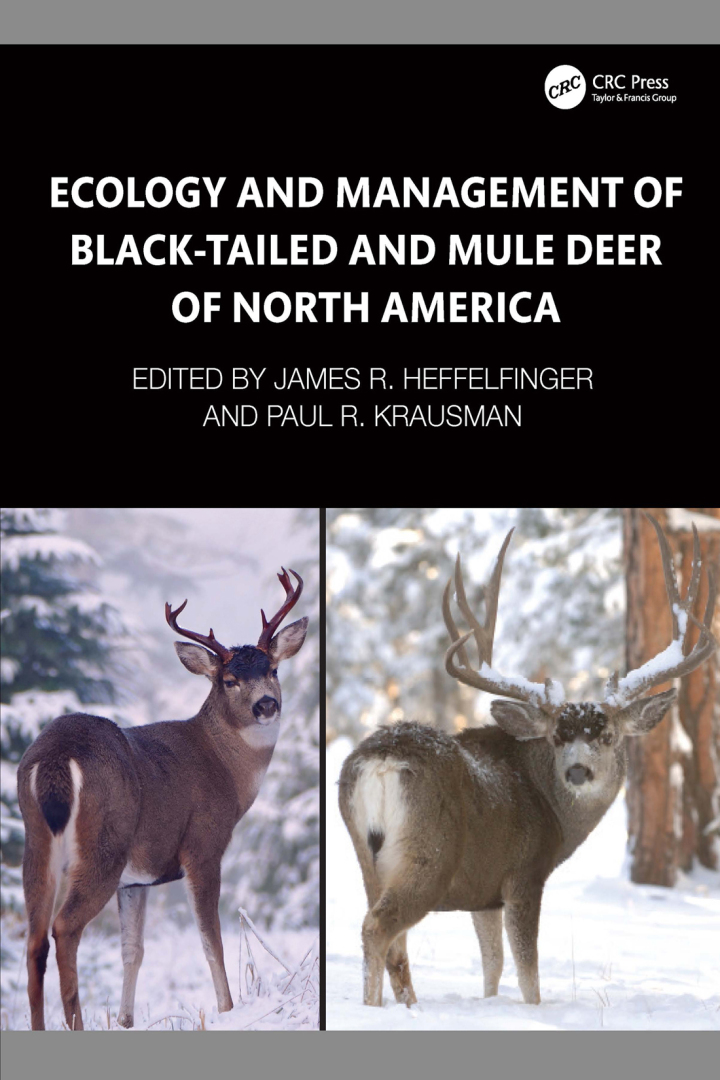
Ecology and Management of Black-tailed and Mule Deer of North America – 1st Edition
Original price was: $160.00.$38.00Current price is: $38.00.
Author: James R. Heffelfinger and Paul R. Krausman
Publisher: CRC Press
Print ISBN: 9781032407609
Delivery Time: Within 4 hours
Copyright: 2023
500 in stock
- Save up to 60% by choosing our eBook
- High-quality PDF Format
- Lifetime & Offline Access
Ecology and Management of Black-tailed and Mule Deer of North America 1st Edition
Ecology and Management of Black-tailed and Mule Deer of North America, 1st Edition by James R. Heffelfinger and Paul R. Krausman
Discover the definitive resource for understanding and managing two of North America’s most iconic deer species. This expertly authored volume combines decades of field research and applied wildlife science to deliver a comprehensive, regionally informed guide to the ecology, behavior, and management of black-tailed and mule deer across western North America—from the Pacific Coast and British Columbia through the Rocky Mountains, Great Basin, Southwest, and northern Mexico.
Clear, evidence-based chapters explore habitat use, seasonal movements, population dynamics, predator-prey relationships, disease ecology, and human-wildlife interactions. Practical management tools and adaptive strategies are presented for conservation biologists, wildlife managers, landowners, and policy makers seeking to balance ecological integrity with sustainable harvest and conflict mitigation. Case studies and regional examples translate theory into real-world solutions for ranchlands, national forests, conservation areas, and urban-edge environments.
Written in an authoritative yet accessible tone, this edition emphasizes applied science and decision-making: how to assess population trends, prioritize habitat restoration, design monitoring programs, and implement effective harvest regulations. Richly illustrated with maps, tables, and field-ready guidance, the book is an essential reference for universities, government agencies, NGOs, and anyone involved in deer conservation or management in North America.
Whether you are a researcher, wildlife professional, land manager, or informed citizen, this book equips you with the knowledge to make informed, place-based decisions that support healthy deer populations and resilient ecosystems. Add this cornerstone reference to your professional library today.