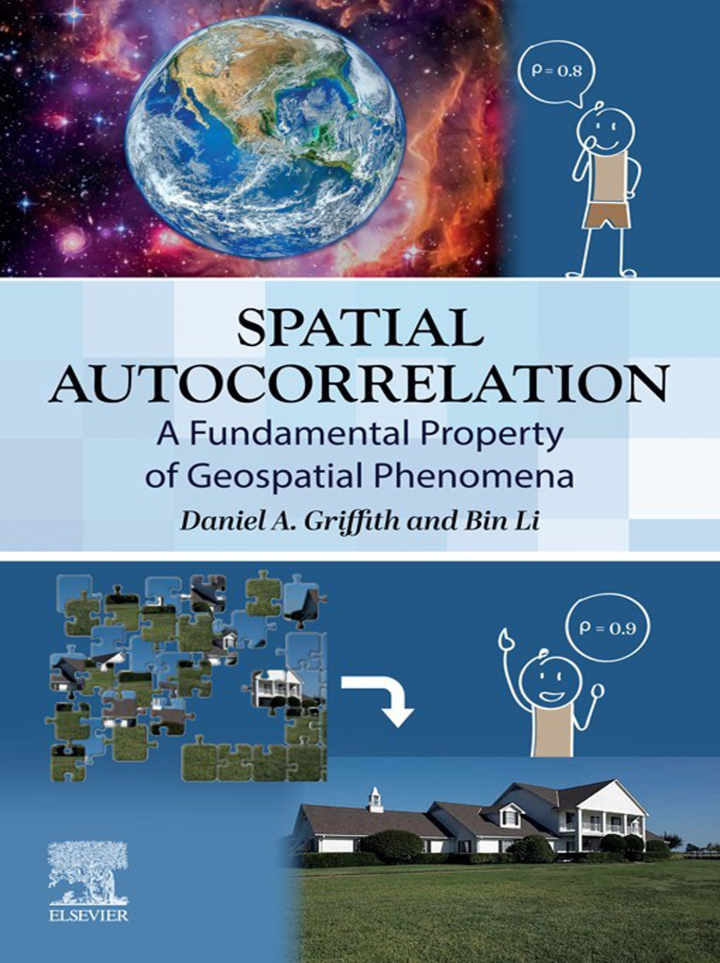
Spatial Autocorrelation
Original price was: $180.00.$38.00Current price is: $38.00.
Author: Daniel Griffith; Bin Li
Publisher: Elsevier (S&T)
Print ISBN: 9780443417436
Delivery Time: Within 4 hours
Copyright: 2025
500 in stock
- Save up to 60% by choosing our eBook
- High-quality PDF Format
- Lifetime & Offline Access
Spatial Autocorrelation
Grab the key to unlocking spatial patterns with Spatial Autocorrelation by Daniel Griffith and Bin Li — an essential guide for geographers, GIS professionals, urban planners, environmental scientists, and data analysts who need to turn location data into actionable insight.
Discover clear, practical explanations of core concepts like Moran’s I, Local Indicators of Spatial Association (LISA), spatial weights, and the interpretation of clusters and outliers. The authors blend theoretical rigor with hands-on orientation, showing how spatial autocorrelation influences inference, model choice, and the integrity of spatial regression. Readers will appreciate lucid examples that connect statistical ideas to real-world problems in urban planning, public health, land-use change, transportation, and environmental monitoring.
Imagine confidently diagnosing spatial dependence, selecting appropriate diagnostics, and communicating results to stakeholders — this book makes that achievable. It emphasizes why spatial thinking matters for regional analysis, policy decisions, and reproducible research, and it demystifies common pitfalls that can skew conclusions when location is ignored.
Whether you’re conducting academic research, building GIS-driven models, or advising on regional strategy, this volume equips you with the methods and interpretation skills to elevate your spatial analyses. Clear prose, authoritative guidance, and practical relevance make it a go-to reference on your bookshelf.
Order your copy of Spatial Autocorrelation today and start transforming spatial data into reliable, policy-relevant intelligence across urban, regional, and environmental contexts.