
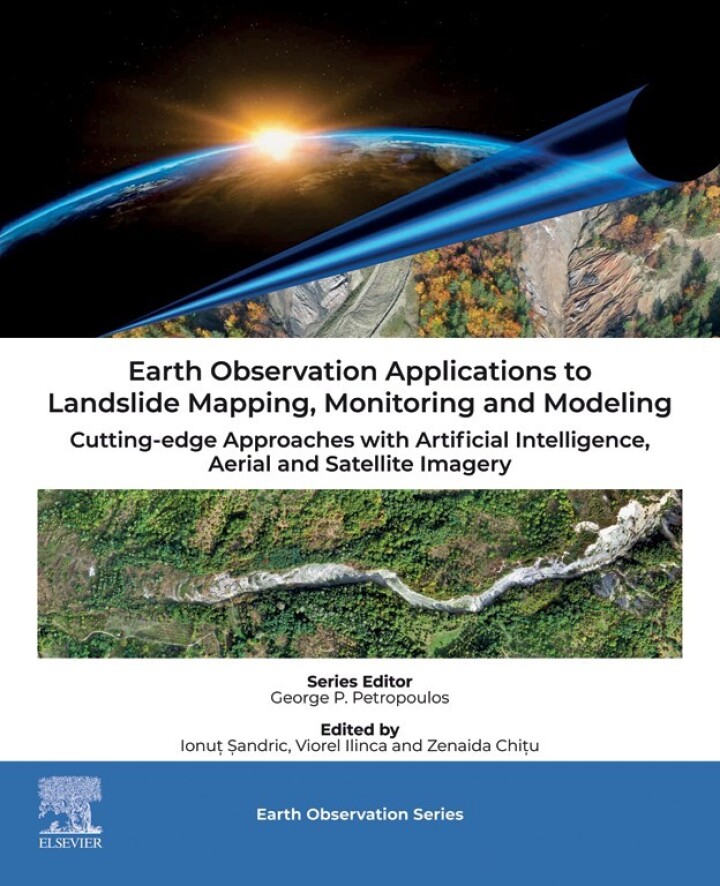
Earth Observation Applications to Landslide Mapping, Monitoring and Modeling
Original price was: $165.00.$38.00Current price is: $38.00.
Author: Ionut Sandric
Publisher: Elsevier (S&T)
Print ISBN: 9780128238684
Delivery Time: Within 4 hours
Copyright: 2025
500 in stock
- Save up to 60% by choosing our eBook
- High-quality PDF Format
- Lifetime & Offline Access
Earth Observation Applications to Landslide Mapping, Monitoring and Modeling
Earth Observation Applications to Landslide Mapping, Monitoring and Modeling by Ionut Sandric delivers a clear, authoritative guide to using satellite and geospatial technologies for landslide risk assessment. This engaging volume opens with compelling real-world examples that show how remote sensing transforms our ability to detect, map, and anticipate slope failures across diverse landscapes — from mountain belts and coastal cliffs to urban peripheries.
Drawing on the latest techniques in satellite imagery, InSAR, DEM analysis, and GIS-based modeling, the book explains step-by-step workflows for landslide mapping, temporal monitoring, and susceptibility modeling. Readers will find practical guidance on processing Sentinel and Landsat data, integrating optical and radar datasets, deriving slope and drainage metrics, and validating models with field and archival records. Clear visuals and case studies illustrate applications in tropical, temperate, and arid regions, making the content geo-relevant for planners and scientists worldwide.
Ideal for geoscientists, remote sensing specialists, civil engineers, and hazard managers, this title bridges theory and practice: enhance early-warning systems, inform land-use planning, and support resilient infrastructure design. The accessible yet rigorous approach helps both newcomers and experienced practitioners turn geospatial data into actionable insights for disaster risk reduction.
For anyone committed to smarter, data-driven landslide management, Ionut Sandric’s book is a must-have reference. Order now to strengthen your geospatial toolkit for mapping, monitoring, and modeling landslide hazards.