Insect Ecomorphology
Original price was: $200.00.$38.00Current price is: $38.00.
Author: Oliver Betz
Publisher: Academic Press
Print ISBN: 9780443185441
Delivery Time: Within 4 hours
Copyright: 2025
500 in stock
- Save up to 60% by choosing our eBook
- High-quality PDF Format
- Lifetime & Offline Access
Insect Ecomorphology
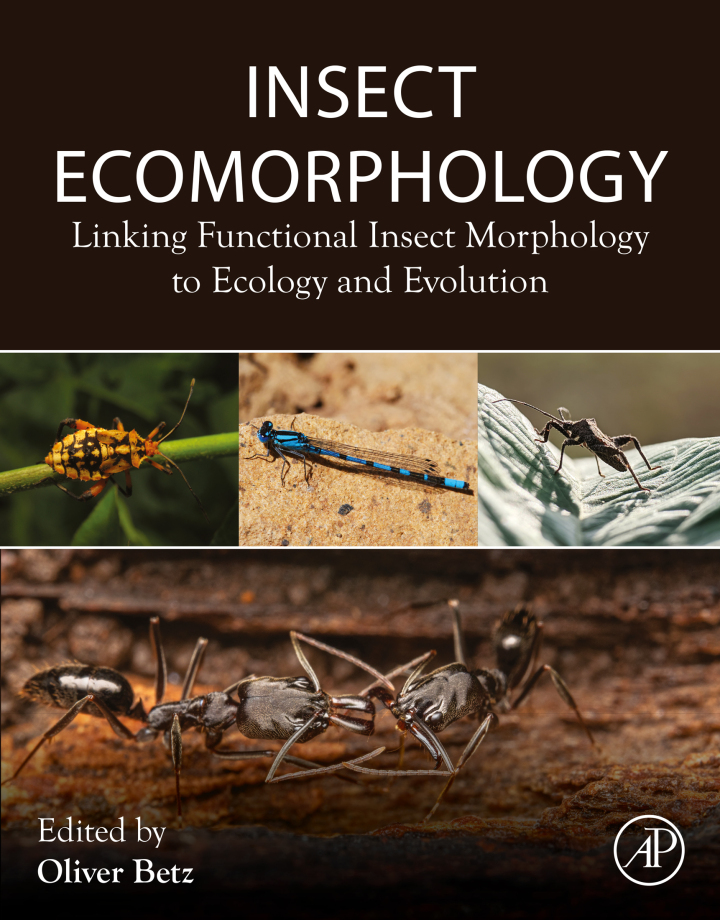
Insect Ecomorphology by Oliver Betz is an essential guide for anyone eager to understand how insect form shapes function across environments. This compelling work opens with striking real-world examples that pull you into the hidden mechanics of wings, legs, mouthparts and sensory organs — showing how evolution and ecology craft design solutions from deserts to rainforests.
Grounded in contemporary entomology and functional morphology, the book moves beyond description to explain adaptive significance: why particular shapes enhance survival, how biomechanics influence behavior, and what morphological patterns reveal about species’ niches. Clear case studies and comparative analyses connect lab findings to field observations, making the text invaluable for students, researchers, naturalists and conservation practitioners throughout Europe, North America and tropical regions.
Readers will appreciate the balanced mix of rigorous science and accessible prose. Key themes include morphological trade-offs, ecological constraints, evolutionary pathways, and applied implications for biodiversity monitoring and habitat management. Practical insights into measurement approaches and interpretive frameworks help translate morphology into testable ecological hypotheses.
Whether you’re preparing for advanced study in entomology, refining field identification skills, or looking for interdisciplinary perspectives for ecology or biomechanics projects, Insect Ecomorphology offers clarity, depth, and relevance. Add this authoritative resource to your collection to deepen your understanding of insect form, function, and their roles in ecosystems worldwide — and discover how tiny structures illuminate big ecological stories.