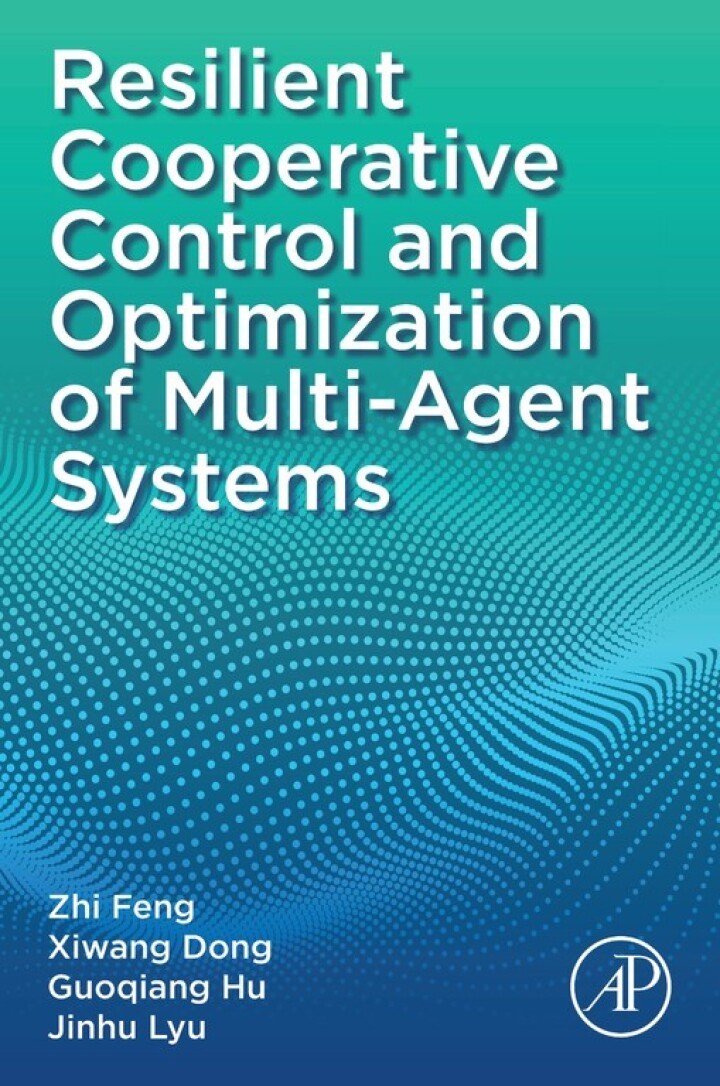
Resilient Cooperative Control and Optimization of Multi-Agent Systems
Original price was: $200.00.$38.00Current price is: $38.00.
Author: Zhi Feng; Xiwang Dong; Guoqiang Hu; Jinhu Lyu
Publisher: Academic Press
Print ISBN: 9780443329883
Delivery Time: Within 4 hours
Copyright: 2025
500 in stock
- Save up to 60% by choosing our eBook
- High-quality PDF Format
- Lifetime & Offline Access
Resilient Cooperative Control and Optimization of Multi-Agent Systems
Resilient Cooperative Control and Optimization of Multi-Agent Systems by Zhi Feng, Xiwang Dong, Guoqiang Hu, and Jinhu Lyu is a definitive resource for engineers, researchers, and advanced students tackling robustness and coordination in networked systems. This timely volume captures the forefront of resilient cooperative control, distributed optimization, and fault-tolerant consensus—essential topics for autonomous vehicles, smart grids, robotics, and large-scale cyber-physical systems.
Begin with a compelling overview of resilience principles, then move into rigorous but accessible treatments of stability analysis, controller synthesis, and optimization algorithms designed for multi-agent networks. The authors blend mathematical depth with practical insight: graph-theoretic foundations, Lyapunov-based methods, and convex and nonconvex optimization techniques are illustrated through real-world scenarios and simulation studies. Emphasis on disturbance rejection, attack resilience, and event-triggered coordination ensures relevance to security-conscious industries and research labs worldwide.
Readers will gain actionable tools for designing robust distributed controllers, improving networked decision-making, and deploying scalable optimization strategies across heterogeneous agents. Whether you’re developing autonomous fleets in North America, smart infrastructure in Europe, or cooperative robotics in Asia, this text offers a global perspective and implementable frameworks.
Clear exposition, extensive examples, and a focus on current challenges make this book ideal as a graduate course text, reference for R&D teams, or a roadmap for interdisciplinary projects. Equip your team with the theory and methods to steer complex multi-agent systems toward reliable, optimized performance—order your copy today.
Related Books
Technology & Engineering
Introduction to Discrete Event Simulation and Agent-based Modeling


Technology & Engineering
Critical Regimes of Two-Phase Flows with a Polydisperse Solid Phase