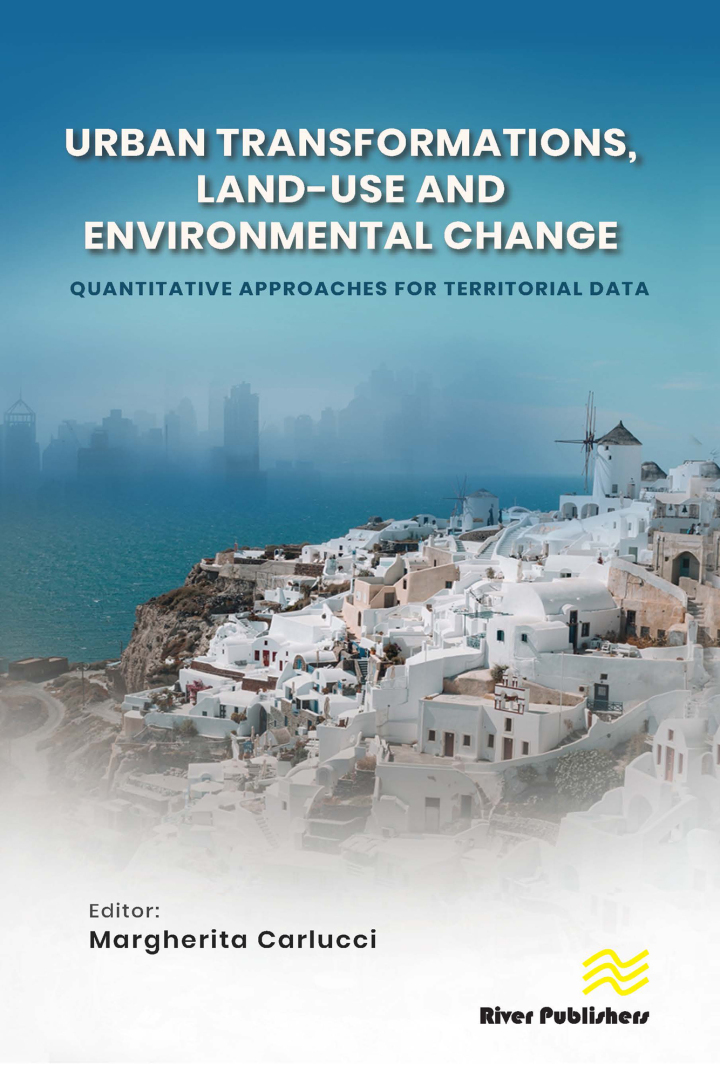
Urban Transformations, Land-use, and Environmental Change: Quantitative Approaches for Territorial Data – 1st Edition
Original price was: $130.00.$38.00Current price is: $38.00.
Author:
Publisher: River Publishers
Print ISBN: 9788770227384
Delivery Time: Within 4 hours
Copyright: 2023
500 in stock
- Save up to 60% by choosing our eBook
- High-quality PDF Format
- Lifetime & Offline Access
Urban Transformations, Land-use, and Environmental Change: Quantitative Approaches for Territorial Data 1st Edition
Catch a clear, data-driven view of how cities and landscapes evolve with Urban Transformations, Land-use, and Environmental Change: Quantitative Approaches for Territorial Data (1st Edition). This authoritative volume translates complex spatial information into practical insight, equipping professionals and students with rigorous methods to map, model, and manage urban change.
Grounded in quantitative techniques—GIS, remote sensing, spatial statistics, and predictive modeling—the book guides readers through the full analytical workflow: acquiring territorial data, cleaning and harmonizing datasets, selecting appropriate models, and interpreting results for policy and planning. Rich examples demonstrate how to quantify land-use dynamics, assess environmental impacts, evaluate urban sprawl, and support resilient, sustainable city strategies.
Designed for urban planners, geographers, environmental scientists, and data analysts, this text balances technical depth with real-world relevance. You’ll find clear explanations of algorithms, step-by-step case studies applicable to cities, metropolitan regions, coastal zones, and peri-urban landscapes, and practical advice for integrating quantitative findings into urban policy and design. The language is accessible without sacrificing methodological rigor, making it ideal for graduate courses, professional reference, and applied research.
Whether you’re forecasting land-use change, conducting environmental impact assessments, or shaping climate-adaptive planning, this book provides the analytical tools to make evidence-based decisions. Its global applicability ensures relevance across regions and scales, from neighborhood interventions to regional planning programs.
Build stronger, data-informed strategies for the future of cities—add Urban Transformations, Land-use, and Environmental Change to your library today and transform raw territorial data into actionable insight.
Related Books





Political Science
American Government: Institutions and Policies – 17th Edition
Political Science
Applied Statistics for Public and Nonprofit Administration – 9th Edition