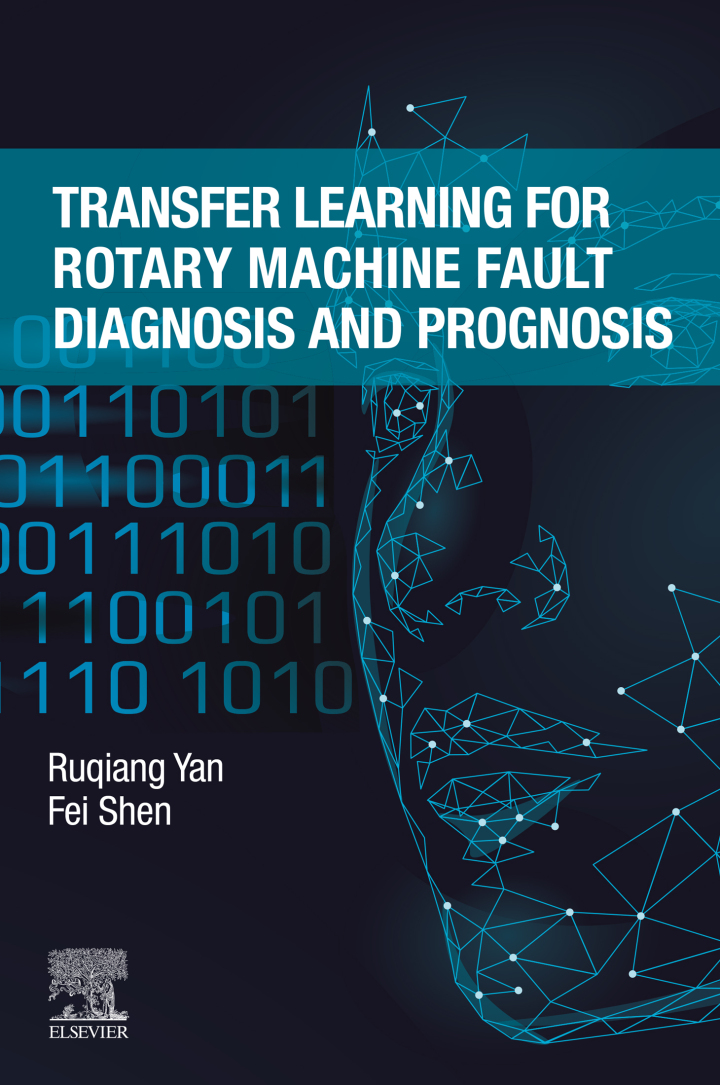
Transfer Learning for Rotary Machine Fault Diagnosis and Prognosis – 1st Edition
Original price was: $200.00.$38.00Current price is: $38.00.
Author: Ruqiang Yan; Fei Shen
Publisher: Elsevier (S&T)
Print ISBN: 9780323999892
Delivery Time: Within 4 hours
Copyright: 2024
500 in stock
- Save up to 60% by choosing our eBook
- High-quality PDF Format
- Lifetime & Offline Access
Transfer Learning for Rotary Machine Fault Diagnosis and Prognosis 1st Edition
Transfer Learning for Rotary Machine Fault Diagnosis and Prognosis, 1st Edition by Ruqiang Yan and Fei Shen is an authoritative, hands-on guide that brings the power of modern machine learning to the heart of industrial reliability. If you work in condition monitoring, predictive maintenance, or industrial AI, this book unlocks practical strategies to detect, diagnose, and predict faults in rotating machinery using transfer learning techniques.
Begin with a clear explanation of why traditional models struggle across different machines and operating conditions, then discover how transfer learning bridges domain gaps—saving time, reducing costly downtime, and improving diagnostic accuracy. The authors combine theoretical foundations with actionable workflows: feature representation, domain adaptation, model fine-tuning, performance evaluation, and deployment considerations.
Readers will benefit from real-world examples and case studies that demonstrate applications to motors, gearboxes, bearings, pumps, and wind-turbine systems. The emphasis on prognosis as well as diagnosis equips engineers and researchers to move from mere fault detection to reliable remaining useful life (RUL) estimation—vital for scheduling maintenance and optimizing asset lifecycles.
Perfect for data scientists, reliability engineers, graduate students, and R&D teams in manufacturing, energy, transportation, and process industries worldwide, this book balances rigor and accessibility. It highlights best practices, evaluation metrics, and practical pitfalls—so you can implement transferable models with confidence across different sites and machines.
Add this essential resource to your library to accelerate predictive maintenance initiatives and convert machine data into actionable insights. Order your copy of Transfer Learning for Rotary Machine Fault Diagnosis and Prognosis today and lead the next wave of intelligent, resilient industrial systems.