
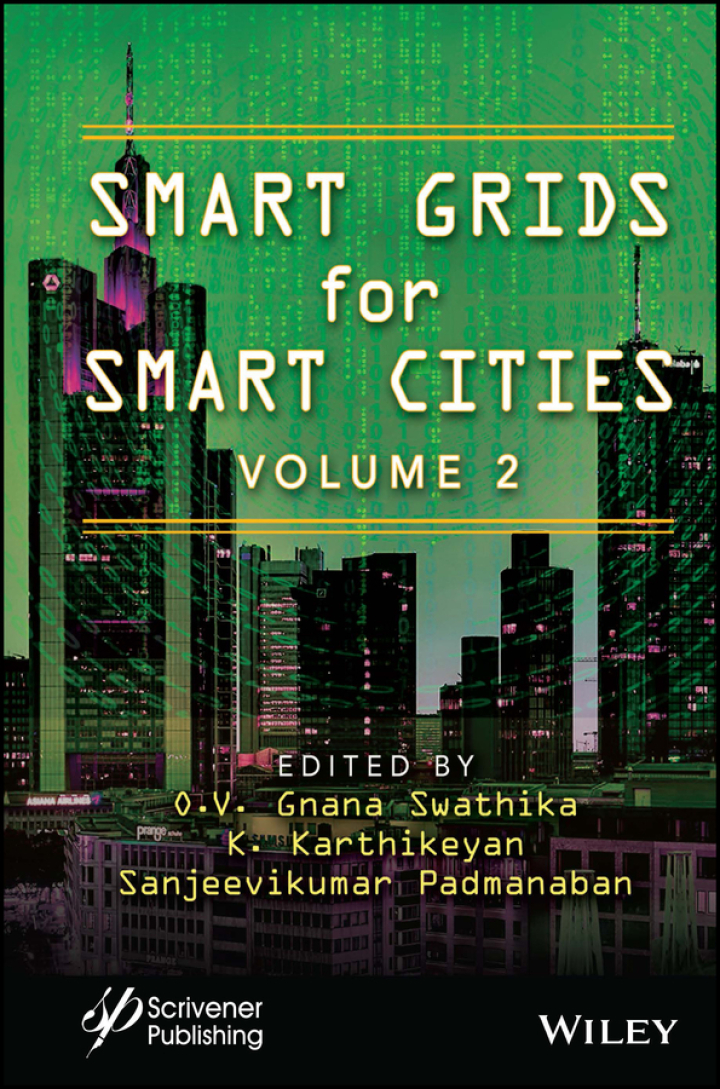
Smart Grids for Smart Cities, Volume 2 – 1st Edition
Original price was: $156.00.$38.00Current price is: $38.00.
Author: O. V. Gnana Swathika, K. Karthikeyan, Sanjeevikumar Padmanaban
Publisher: Wiley-Scrivener
Print ISBN: 9781394215874
Delivery Time: Within 4 hours
Copyright: 2023
500 in stock
- Save up to 60% by choosing our eBook
- High-quality PDF Format
- Lifetime & Offline Access
Smart Grids for Smart Cities, Volume 2 1st Edition
Grab attention with a forward-looking resource built for today’s urban energy challenges: Smart Grids for Smart Cities, Volume 2 (1st Edition) by O. V. Gnana Swathika, K. Karthikeyan, and Sanjeevikumar Padmanaban delivers an authoritative, practical guide to modern grid modernization and urban energy systems.
This volume takes readers beyond theory into actionable solutions—integrating renewable energy, distributed generation, microgrids, demand response, and advanced communication protocols that form the backbone of a resilient smart city. Clear explanations of control strategies, power-quality considerations, stability analysis, and interoperability help electrical engineers, urban planners, policy makers, and graduate students bridge the gap between research and real-world deployment.
Packed with regional and global perspectives, the book addresses challenges faced by rapidly growing metropolitan centers across India, Asia, Europe, and the Americas. Case-oriented discussion helps utilities and municipal authorities evaluate grid upgrades, optimize energy management, and design cost-effective, low-carbon systems tailored to local regulations and climate conditions.
What you’ll gain:
– A concise roadmap for implementing smart grid technologies in urban environments
– Practical insights into the interplay of IoT, telecommunications, and power systems
– Tools for planning resilient, sustainable energy infrastructure that supports economic growth and citizen well-being
Readable, well-structured, and richly informed by contemporary research, this volume is ideal for professionals seeking to lead smart-city energy transitions and for students preparing for careers in power systems engineering. Whether you’re evaluating microgrid pilots or scaling city-wide smart grid projects, this book equips you with the knowledge to make confident, impact-driven decisions.
Order your copy today and take a decisive step toward creating cleaner, smarter, more resilient urban energy systems.
Note: eBooks do not include supplementary materials such as CDs, access codes, etc.