
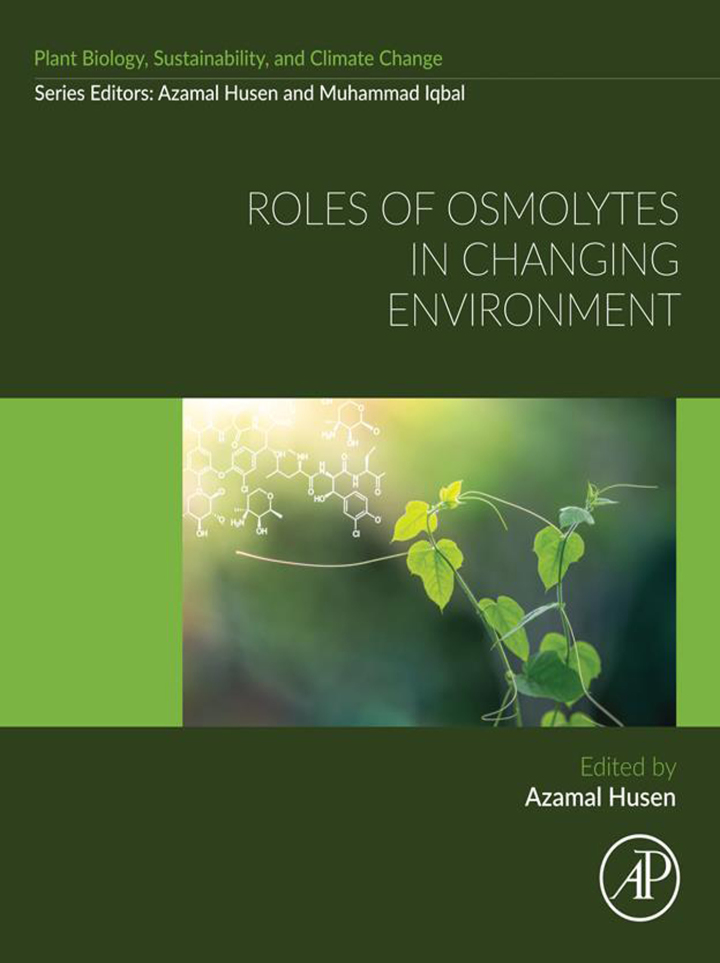
Roles of Osmolytes in Changing Environment
Original price was: $200.00.$38.00Current price is: $38.00.
Author: Azamal Husen
Publisher: Academic Press
Print ISBN: 9780443265495
Delivery Time: Within 4 hours
Copyright: 2025
500 in stock
- Save up to 60% by choosing our eBook
- High-quality PDF Format
- Lifetime & Offline Access
Roles of Osmolytes in Changing Environment
Capture a deeper understanding of how life adapts to a shifting planet with Roles of Osmolytes in Changing Environment by Azamal Husen. This authoritative work illuminates the molecular and physiological strategies organisms use to survive salinity, drought, temperature extremes, and pollution—making it essential reading for researchers, graduate students, agronomists, and environmental professionals worldwide.
Discover clear, evidence-based explanations of how osmolytes—small organic compounds such as proline, glycine betaine, and trehalose—stabilize proteins and cellular structures under stress. Husen synthesizes laboratory findings and field observations to show practical implications for crop improvement, coastal and arid agriculture, microbial ecology, and biotechnological interventions. Regional challenges from coastal salinization in Asia to drought-prone landscapes in Africa and wildfire-affected ecosystems in the Americas are given context, making the book highly relevant for global and local applications.
Packed with accessible summaries of physiological mechanisms, analytical approaches, and latest research trends, this volume bridges basic science and real-world solutions. Readers will learn how osmolyte metabolism influences stress tolerance, how screening and engineering strategies can enhance resilience, and where future research should focus in the face of climate change.
Whether you’re seeking to bolster crop performance, design resilient ecosystems, or deepen your understanding of cellular stress responses, Azamal Husen’s work delivers a compelling, practical guide. Add Roles of Osmolytes in Changing Environment to your library today to stay at the forefront of environmental physiology, sustainable agriculture, and climate-adaptive science. Order now to empower your research and practice with insights that matter.
Note: eBooks do not include supplementary materials such as CDs, access codes, etc.