

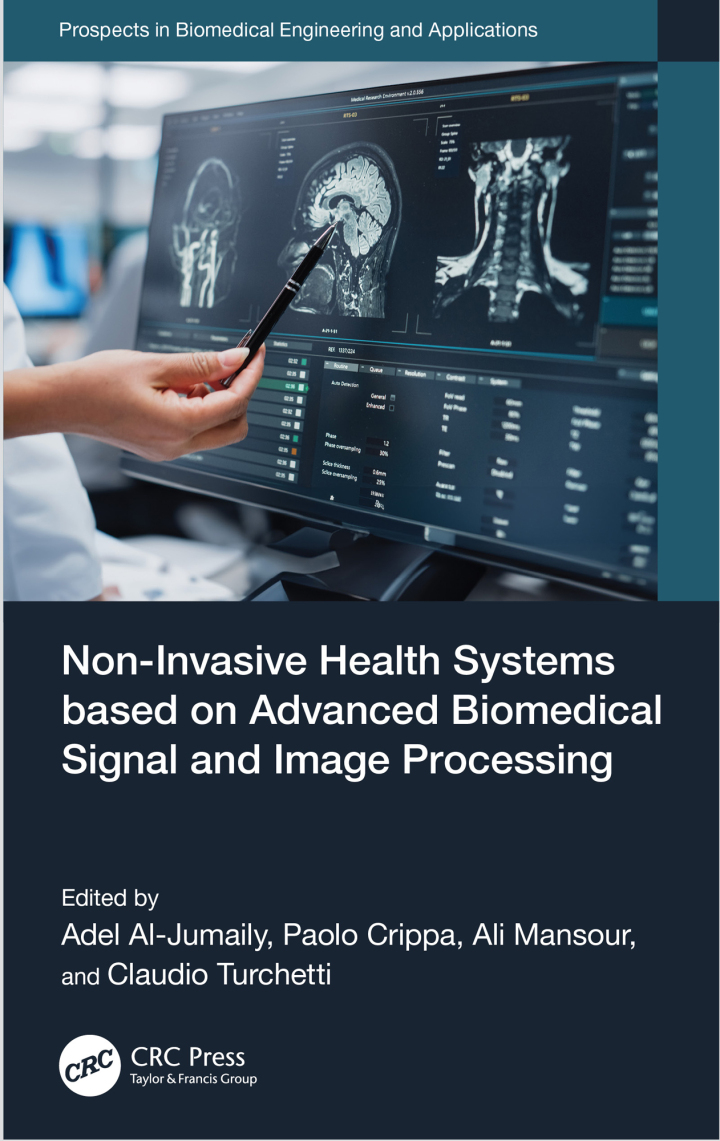
Non-Invasive Health Systems based on Advanced Biomedical Signal and Image Processing – 1st Edition
Original price was: $79.99.$38.00Current price is: $38.00.
Author:
Publisher: CRC Press
Print ISBN: 9781032386942
Delivery Time: Within 4 hours
Copyright: 2024
500 in stock
- Save up to 60% by choosing our eBook
- High-quality PDF Format
- Lifetime & Offline Access
Non-Invasive Health Systems based on Advanced Biomedical Signal and Image Processing 1st Edition
Non-Invasive Health Systems based on Advanced Biomedical Signal and Image Processing 1st Edition delivers a clear, practical roadmap to the technologies reshaping modern diagnostics and monitoring. Combining cutting-edge principles of biomedical signal and image processing with real-world clinical applications, this volume is a must-read for professionals seeking non-invasive, patient-friendly solutions.
Start with a compelling overview of how advanced algorithms extract meaningful patterns from ECG, EEG, ultrasound and MRI data, then move into hands-on discussions of signal denoising, feature extraction, segmentation and quantitative imaging. Chapters bridge theory and practice, showing how wearable sensors, telemedicine platforms and smart imaging workflows improve diagnostic accuracy and patient outcomes across hospitals, clinics and research centers worldwide.
What makes this edition essential is its focus on translational value: engineers and data scientists will find robust algorithmic strategies; clinicians and radiologists will appreciate practical case studies that demonstrate diagnostic impact; students and researchers gain a cohesive foundation for innovation in healthcare technology. Emphasis on interoperability, real-time processing and scalable architectures helps readers design systems fit for deployment in diverse geographic and clinical environments.
Whether you’re implementing remote monitoring programs, enhancing medical imaging pipelines, or exploring AI-driven diagnostics, this book equips you with the tools to accelerate non-invasive healthcare solutions. Clear explanations, actionable techniques and global relevance make it a valuable reference on every professional shelf.
Secure your copy of Non-Invasive Health Systems based on Advanced Biomedical Signal and Image Processing 1st Edition today and stay at the forefront of biomedical engineering and clinical innovation.
Note: eBooks do not include supplementary materials such as CDs, access codes, etc.
Related Books

Technology & Engineering
Soft Computing in Condition Monitoring and Diagnostics of Electrical and Mechanical Systems




Technology & Engineering
Fundamentals of Spacecraft Attitude Determination and Control – 1st Edition

Technology & Engineering
Introduction to Discrete Event Simulation and Agent-based Modeling

Technology & Engineering
Matlab: A Practical Introduction to Programming and Problem Solving – 3rd Edition
