

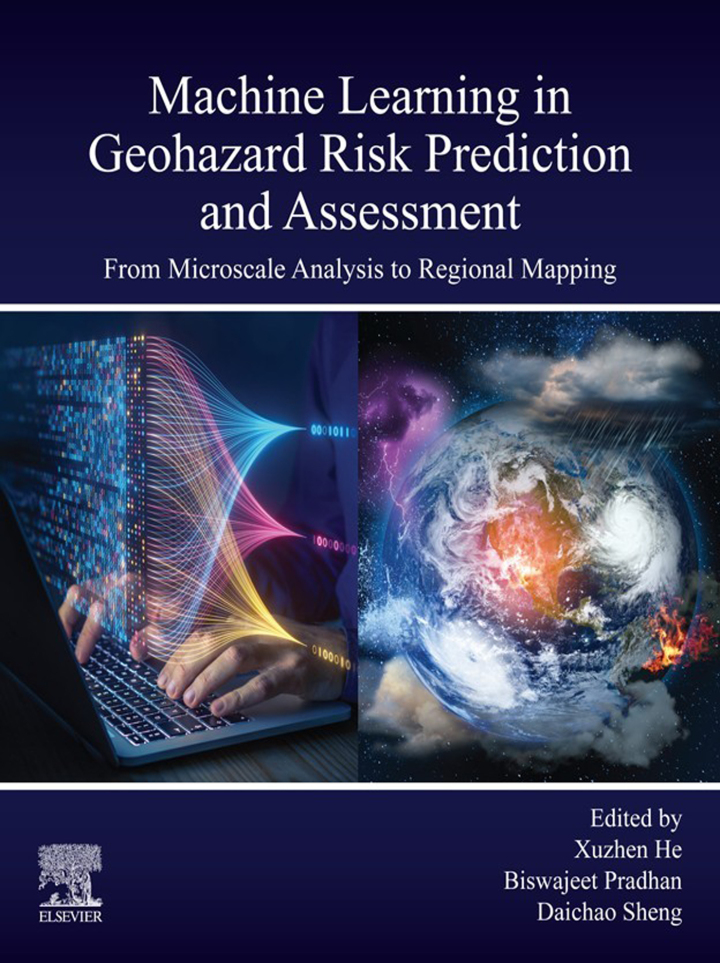
Machine Learning in Geohazard Risk Prediction and Assessment
Original price was: $175.00.$38.00Current price is: $38.00.
Author: Xuzhen He
Publisher: Elsevier (S&T)
Print ISBN: 9780443236631
Delivery Time: Within 4 hours
Copyright: 2025
500 in stock
- Save up to 60% by choosing our eBook
- High-quality PDF Format
- Lifetime & Offline Access
Machine Learning in Geohazard Risk Prediction and Assessment
Machine Learning in Geohazard Risk Prediction and Assessment by Xuzhen He invites readers into the cutting edge of disaster science, where data-driven intelligence meets terrain, climate and infrastructure resilience. If you work with landslides, floods, earthquakes or erosion, this book presents practical pathways to transform remote sensing, GIS and ground observations into actionable risk forecasts.
Beginner-friendly yet technically robust, the text guides you through essential machine learning concepts—feature engineering, model selection, uncertainty quantification and validation—applied specifically to geohazard contexts. Richly illustrated with real-world examples and regional case studies across mountainous, coastal and urban environments, the book shows how satellite imagery, LiDAR, sensor networks and historical inventories combine to produce reliable hazard maps and early-warning indicators.
Discover how ensemble methods, deep learning architectures and spatial-temporal modeling can improve prediction accuracy and help prioritize mitigation investments. Emphasis on model interpretability and operational deployment ensures solutions are usable by engineers, planners and policymakers, not just data scientists.
Perfect for researchers, practitioners in geology, civil engineering, environmental management, and graduate students, this volume bridges theory and practice to support safer infrastructure and communities worldwide. Clear takeaways, reproducible workflows and practical recommendations make it an essential reference for anyone tackling geohazard risk prediction and assessment.
Equip your toolkit for smarter, location-aware disaster risk management—explore the methods and case studies in Machine Learning in Geohazard Risk Prediction and Assessment and start turning data into resilience today.
Note: eBooks do not include supplementary materials such as CDs, access codes, etc.