
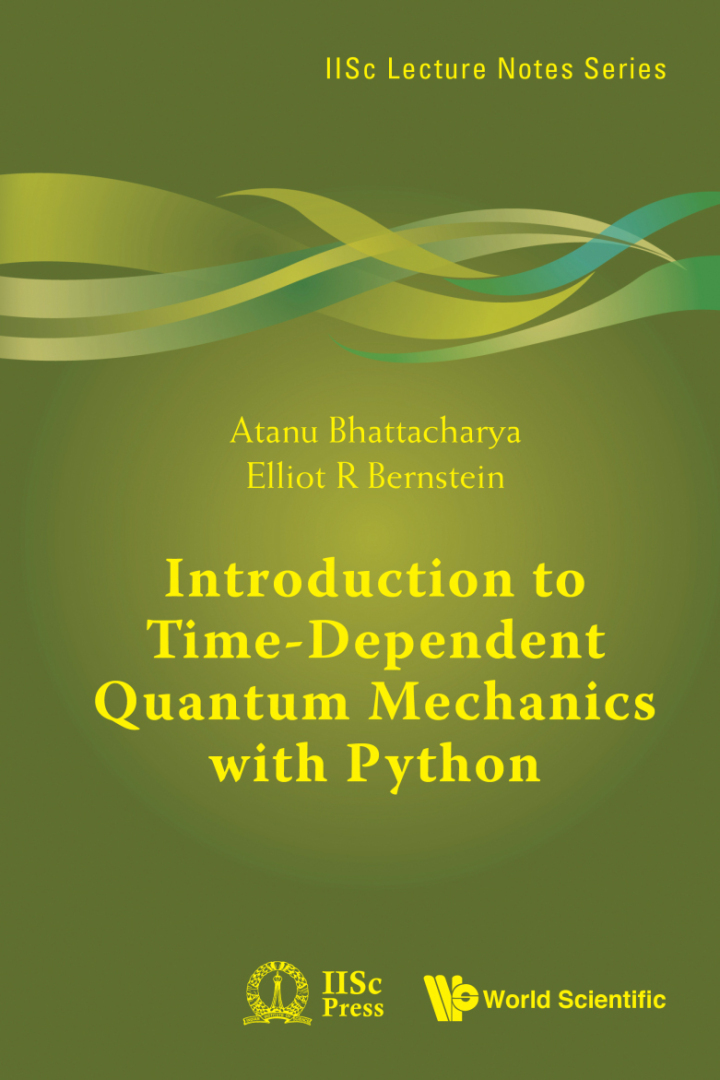
Introduction to Time-Dependent Quantum Mechanics with Python
Original price was: $43.00.$38.00Current price is: $38.00.
Author: Atanu Bhattacharya; Elliot R Bernstein
Publisher: WSPC
Print ISBN: 9789811277160
Delivery Time: Within 4 hours
Copyright:
500 in stock
- Save up to 60% by choosing our eBook
- High-quality PDF Format
- Lifetime & Offline Access
Introduction to Time-Dependent Quantum Mechanics with Python
Introduction to Time-Dependent Quantum Mechanics with Python by Atanu Bhattacharya and Elliot R. Bernstein
Grabs attention with a lively, modern approach to quantum dynamics, this text translates abstract theory into practical computation. If you want to move beyond static eigenstates and explore how quantum systems evolve in time, this book delivers clear explanations paired with hands-on Python implementations.
The authors guide readers through the fundamentals of the time-dependent Schrödinger equation, unitary evolution, and wavepacket dynamics, then build on those foundations with numerical propagation techniques and stability considerations. Detailed examples illuminate resonance, scattering, and driven systems while emphasizing best practices for numerical accuracy and performance. Explanations are concise yet rigorous, making complex concepts accessible without sacrificing depth.
Ideal for advanced undergraduates, graduate students, and researchers in physics, chemistry, and engineering, this book blends theory and practice to accelerate learning. Readers gain practical skills in computational quantum mechanics, learn to implement simulations in Python, and develop intuition for interpreting time-resolved results. The presentation suits classroom use, independent study, and research preparation for audiences in the US, Europe, India, and worldwide.
Clear learning outcomes, worked examples, and progressive exercises help cement understanding and build confidence. Whether you’re preparing for research projects, computational coursework, or professional development in quantum technologies, this volume is a compact, authoritative resource.
Ready to bring time-dependent quantum mechanics to life? Add Introduction to Time-Dependent Quantum Mechanics with Python to your library and start simulating quantum dynamics with clarity and confidence.
Note: eBooks do not include supplementary materials such as CDs, access codes, etc.