

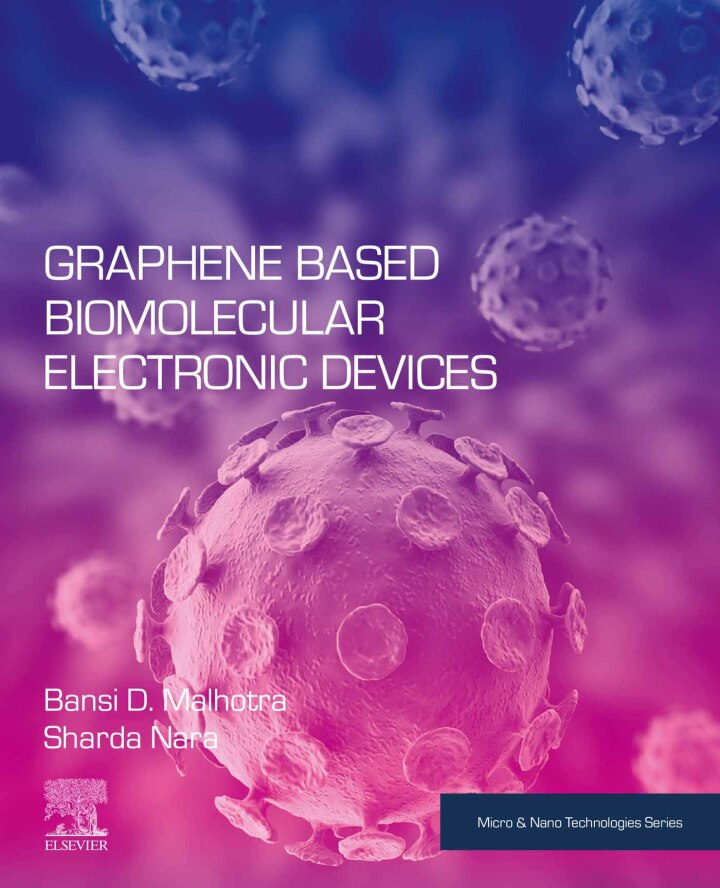
Graphene Based Biomolecular Electronic Devices – 1st Edition
Original price was: $220.00.$38.00Current price is: $38.00.
Author: Bansi D. Malhotra; Sharda Nara
Publisher: Elsevier (S&T)
Print ISBN: 9780128215418
Delivery Time: Within 4 hours
Copyright: 2023
500 in stock
- Save up to 60% by choosing our eBook
- High-quality PDF Format
- Lifetime & Offline Access
Graphene Based Biomolecular Electronic Devices 1st Edition
Capture the leading edge of bioelectronics with Graphene Based Biomolecular Electronic Devices, 1st Edition by Bansi D. Malhotra and Sharda Nara. This authoritative text spotlights how graphene’s extraordinary electrical, mechanical, and surface properties are transforming biomolecular devices—offering researchers, engineers, and industry professionals a clear pathway from fundamentals to real-world application.
Dive into expertly curated content that covers graphene synthesis and functionalization, device architectures, transduction mechanisms, and performance optimization for biosensors and bioelectronic platforms. Practical discussions bridge theory and practice, examining applications in medical diagnostics, environmental monitoring, wearable sensors, and point-of-care devices. The book balances rigorous scientific insight with accessible explanations, making it essential for graduate students, R&D scientists, and tech developers worldwide.
Whether you’re working in academic labs in India, high-tech startups in Europe, or clinical research centers in North America, this volume provides globally relevant perspectives and case-driven examples to accelerate innovation in biomolecular electronic devices. It also examines challenges—scalability, reproducibility, and regulatory considerations—arming readers with strategies to navigate translation from bench to market.
Well-structured and forward-looking, Graphene Based Biomolecular Electronic Devices is both a reference and a roadmap for the next generation of bioelectronic solutions. If you’re seeking a comprehensive, practical, and industry-aware guide to graphene-enabled biosensing and biomolecular electronics, this book belongs on your shelf.
Order your copy today to stay at the forefront of graphene research and to bring advanced biomolecular electronic device concepts into your projects and product development pipeline.
Note: eBooks do not include supplementary materials such as CDs, access codes, etc.
Related Books





Technology & Engineering
Fundamentals of Spacecraft Attitude Determination and Control – 1st Edition