
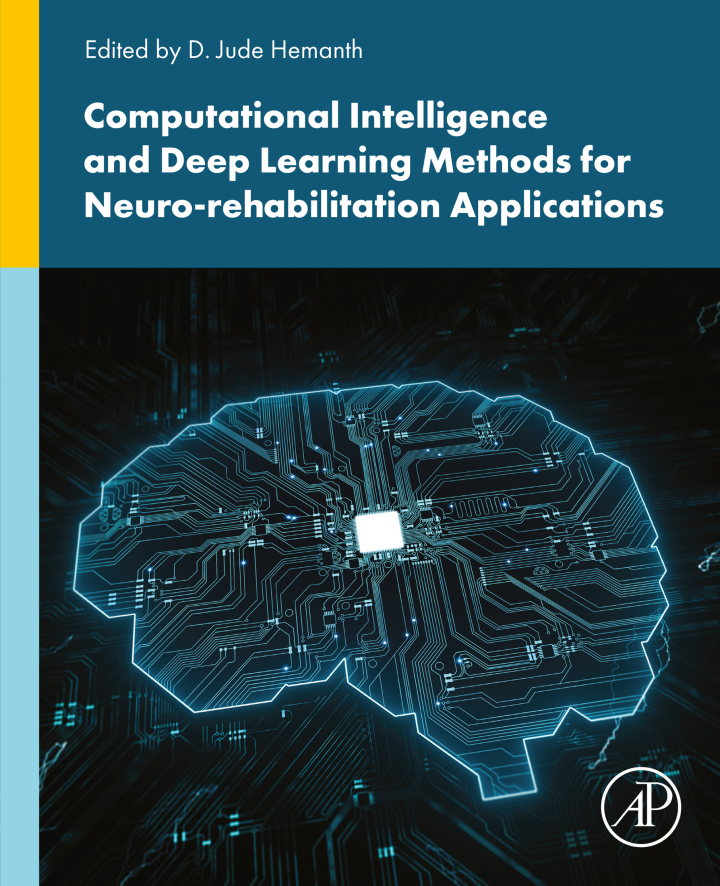
Computational Intelligence and Deep Learning Methods for Neuro-rehabilitation Applications – 1st Edition
Original price was: $180.00.$38.00Current price is: $38.00.
Author: D. Jude Hemanth
Publisher: Academic Press
Print ISBN: 9780443137723
Delivery Time: Within 4 hours
Copyright: 2024
500 in stock
- Save up to 60% by choosing our eBook
- High-quality PDF Format
- Lifetime & Offline Access
Computational Intelligence and Deep Learning Methods for Neuro-rehabilitation Applications 1st Edition
Computational Intelligence and Deep Learning Methods for Neuro-rehabilitation Applications (1st Edition) by D. Jude Hemanth is a definitive guide for professionals who want to harness the power of AI to transform neuro-rehabilitation. Engaging and authoritative, this book captures the latest advances in computational intelligence, deep learning, sensor fusion, and wearable systems for clinical and assistive applications.
Discover practical, research-driven explanations of neural network architectures—CNNs, RNNs, LSTM, and transfer learning—tailored to rehabilitation tasks such as gait analysis, prosthetic control, stroke recovery, Parkinson’s management, and brain–computer interfaces. Each chapter connects theory to practice with clear algorithmic workflows, performance metrics, and guidance on dataset handling and model validation, making it ideal for biomedical engineers, clinicians, data scientists, and graduate students.
What sets this volume apart is its emphasis on clinical translation: step-by-step strategies for deploying real-world solutions, integrating wearable sensors and IoT devices, and addressing ethical and regulatory considerations. Whether you’re developing assistive technologies or leading interdisciplinary research, this book helps you design robust, explainable models that prioritize patient outcomes.
Perfect for readers across North America, Europe, Asia, and beyond, this edition is optimized for modern rehabilitation labs and hospital settings seeking scalable AI interventions. If you want a practical, research-focused resource that bridges machine learning and neuro-rehabilitation, D. Jude Hemanth’s work delivers actionable insights and forward-looking trends.
Advance your expertise and accelerate clinical impact—add this essential title to your professional library today.
Note: eBooks do not include supplementary materials such as CDs, access codes, etc.