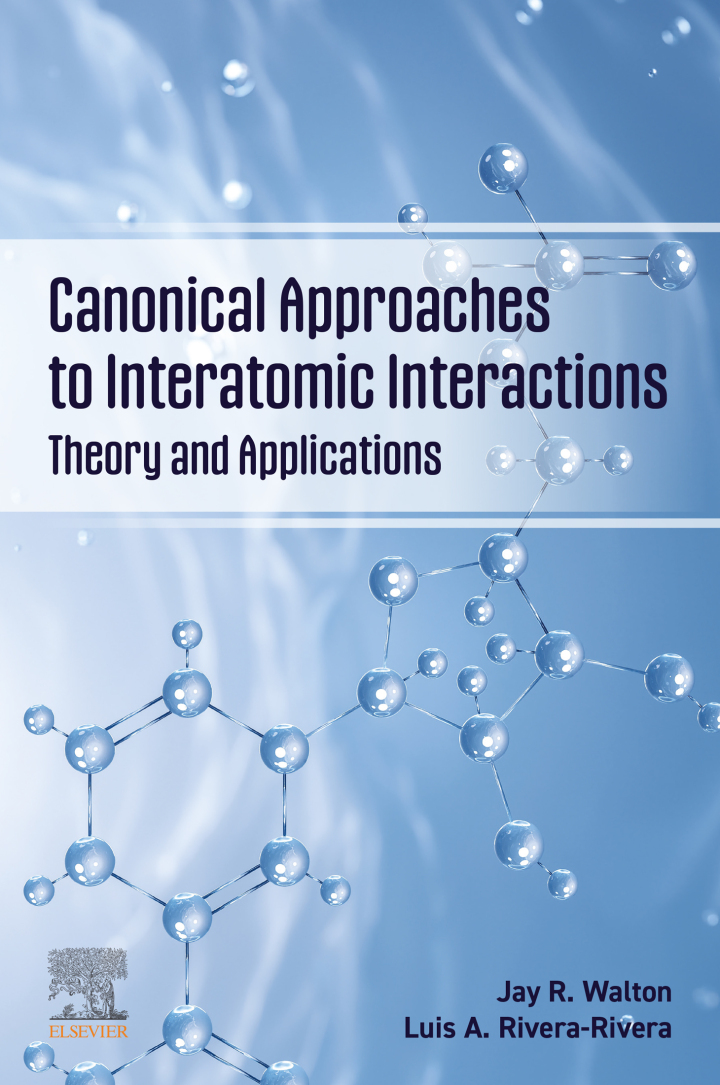
Canonical Approaches to Interatomic Interactions
Original price was: $200.00.$38.00Current price is: $38.00.
Author: Luis A. Rivera-Rivera; Jay R. Walton
Publisher: Elsevier (S&T)
Print ISBN: 9780323911559
Delivery Time: Within 4 hours
Copyright: 2026
500 in stock
- Save up to 60% by choosing our eBook
- High-quality PDF Format
- Lifetime & Offline Access
Canonical Approaches to Interatomic Interactions
Canonical Approaches to Interatomic Interactions by Luis A. Rivera-Rivera and Jay R. Walton is an essential, modern reference for scientists and advanced students working at the intersection of statistical mechanics, quantum theory, and materials modeling. Clear, authoritative, and tightly focused, this title delivers both rigorous theory and practical insight into how canonical methods illuminate the forces that govern atomic-scale behavior.
Opening with foundational principles, the book develops canonical ensemble frameworks and shows how they connect to interatomic potentials, force-field development, and first-principles treatments. Readers will find lucid derivations, thoughtful comparisons between approaches, and concrete examples that translate abstract concepts into computational workflows used in molecular dynamics and materials simulation. Case studies span simple model systems to more complex materials, illustrating applicability across chemistry, condensed-matter physics, and nanoscience.
What sets this work apart is its balance of depth and usability: theoretical clarity supports accurate modeling, while practical guidance helps researchers implement canonical treatments in their own simulations. Whether you are refining interatomic potentials, validating computational predictions, or teaching advanced courses, this volume strengthens both understanding and practice.
Written with an international research community in mind, this book is valuable to graduate students, postdocs, and professionals across academia and industry—from laboratories in North America and Europe to research centers in Asia-Pacific. For anyone seeking a compact, authoritative guide to canonical methods applied to interatomic interactions, this is a must-have addition to your library.
Expand your toolkit and deepen your modeling expertise—order Canonical Approaches to Interatomic Interactions today and bring greater precision to your computational investigations.