
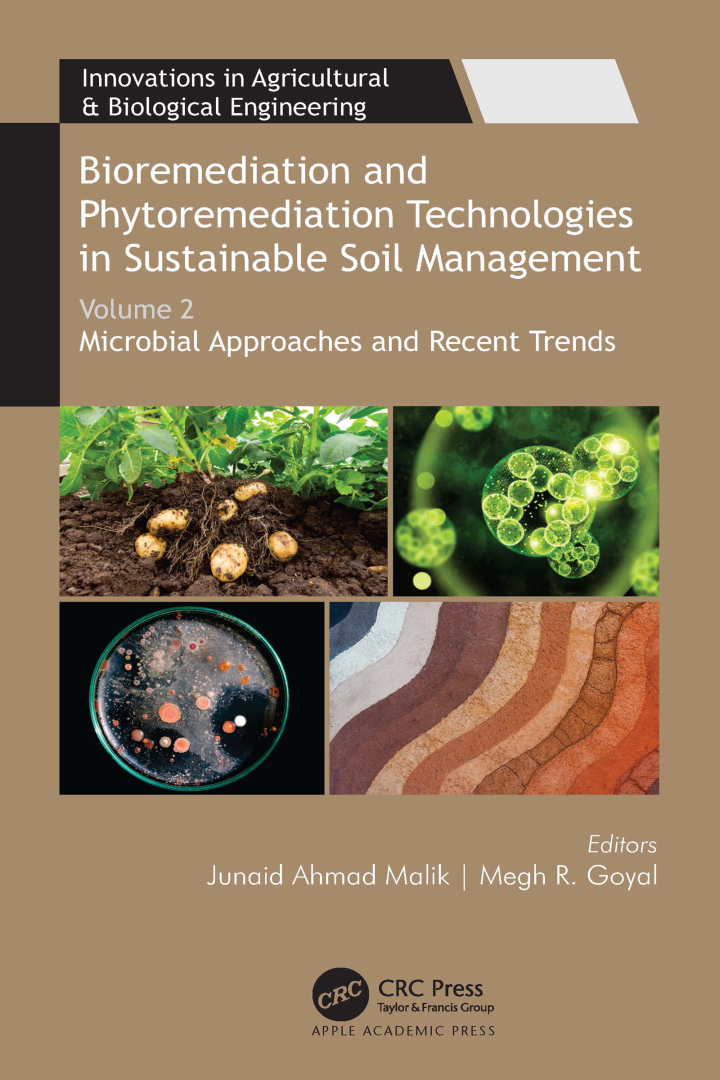
Bioremediation and Phytoremediation Technologies in Sustainable Soil Management – 1st Edition
Original price was: $169.95.$38.00Current price is: $38.00.
Author: Junaid Ahmad Malik, PhD
Publisher: Apple Academic Press (T&F)
Print ISBN: 9781774638927
Delivery Time: Within 4 hours
Copyright: 2023
500 in stock
- Save up to 60% by choosing our eBook
- High-quality PDF Format
- Lifetime & Offline Access
Bioremediation and Phytoremediation Technologies in Sustainable Soil Management 1st Edition
Bioremediation and Phytoremediation Technologies in Sustainable Soil Management, 1st Edition by Junaid Ahmad Malik, PhD, offers a definitive, practical guide for anyone tackling contaminated land. If you’re a researcher, environmental engineer, agronomist, policymaker, or student seeking effective, low-cost solutions for soil restoration, this book grabs your attention from the first page.
Drawing on cutting‑edge science and real-world field studies, the text explains microbial and plant-based remediation strategies that neutralize heavy metals, petroleum hydrocarbons, pesticides, and other persistent pollutants. Clear explanations of mechanisms—biodegradation, phytoextraction, phytostabilization, rhizoremediation—are paired with step-by-step protocols, monitoring approaches, and risk assessment tools that make complex techniques accessible and actionable.
What sets this volume apart is its focus on sustainable soil management across diverse environments: temperate and tropical climates, saline and arid lands, and urban brownfields. Case studies from South Asia, Europe, and North America demonstrate scalable solutions tailored to local soils and regulatory contexts, making it geopolitically relevant for practitioners worldwide. Emphasis on cost-benefit analysis, community engagement, and long-term ecological recovery ensures interventions that are scientifically sound and socially responsible.
Written in a concise, authoritative voice, Dr. Malik blends academic rigor with practical insight—ideal for course adoption, field implementation, or policy formulation. Each chapter builds toward integrated strategies that improve soil health, boost agricultural productivity, and support climate resilience.
For anyone committed to restoring contaminated sites and promoting sustainable soil stewardship, this book is an indispensable resource. Order your copy today to equip your team with proven bioremediation and phytoremediation techniques that deliver measurable environmental impact.
Note: eBooks do not include supplementary materials such as CDs, access codes, etc.
Related Books



Technology & Engineering
Soft Computing in Condition Monitoring and Diagnostics of Electrical and Mechanical Systems