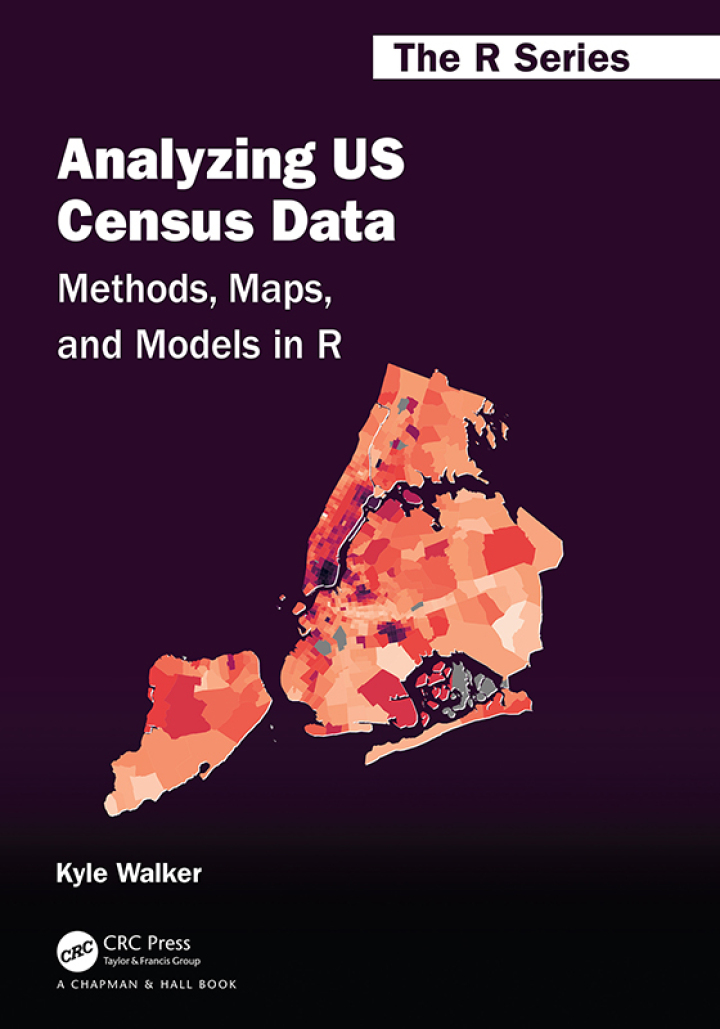
Analyzing US Census Data – 1st Edition
Original price was: $74.99.$38.00Current price is: $38.00.
Author: Kyle Walker
Publisher: Chapman & Hall
Print ISBN: 9781032366449
Delivery Time: Within 4 hours
Copyright: 2023
500 in stock
- Save up to 60% by choosing our eBook
- High-quality PDF Format
- Lifetime & Offline Access
Analyzing US Census Data 1st Edition
Capture timely insights from America’s most authoritative data source with Analyzing US Census Data, 1st Edition by Kyle Walker. This clear, practical guide equips researchers, planners, students, and policy professionals to extract meaning from Census and American Community Survey datasets across the United States — from national trends to county- and neighborhood-level analysis.
Walker’s approachable explanations demystify complex topics: sampling design, weighting, margin of error, and combining multiple datasets for richer geographic and demographic perspective. Real-world examples show how to interpret population change, household composition, labor-force indicators, and migration patterns that shape state and local decisions. Step-by-step case studies illustrate common workflows for urban planners, public-health analysts, educators, and local government staff working with state, county, and metro-area data.
You’ll gain confidence in choosing the right variables, accounting for uncertainty, and producing reproducible tables and maps that support grant applications, reports, and policy briefs. Emphasis on geographic specificity — from state-level comparisons to census tract and block group insights — makes this book especially valuable for professionals focused on regional planning and community development across the United States.
Whether you are learning census methodology or refining analytic techniques, Analyzing US Census Data offers a practical, authoritative roadmap to turn raw numbers into actionable intelligence. Add this essential resource to your shelf and start making smarter, data-driven decisions for your state, city, or organization.
Note: eBooks do not include supplementary materials such as CDs, access codes, etc.