
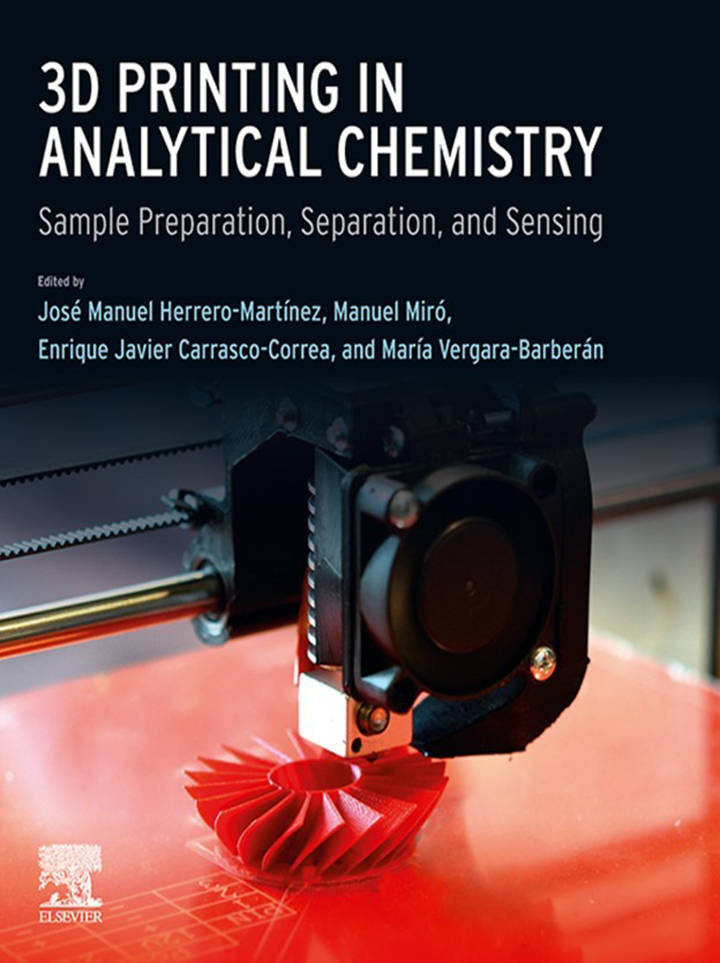
3D Printing in Analytical Chemistry
Original price was: $200.00.$38.00Current price is: $38.00.
Author: José Manuel Herrero Martínez, Manuel Miró, Enrique Javier Carrasco-Correa, María Vergara-Barberán
Publisher: Elsevier (S&T)
Print ISBN: 9780443156755
Delivery Time: Within 4 hours
Copyright: 2025
500 in stock
- Save up to 60% by choosing our eBook
- High-quality PDF Format
- Lifetime & Offline Access
3D Printing in Analytical Chemistry
3D Printing in Analytical Chemistry by José Manuel Herrero Martínez, Manuel Miró, Enrique Javier Carrasco-Correa and María Vergara-Barberán is a practical, forward-looking guide that brings additive manufacturing into the heart of modern analytical labs. Whether you’re a researcher, lab manager, or graduate student, this book unlocks how 3D printing transforms sample handling, sensor fabrication, and rapid prototyping for chemical analysis.
Start with clear, engaging explanations of 3D printing technologies most relevant to analytical chemistry, then move into applied workflows: designing custom holders, microfluidic chips, electrochemical cell housings, and bespoke fixtures that accelerate method development. The authors balance theory with hands-on tips—material selection, resolution trade-offs, and post-processing—that help you avoid common pitfalls and achieve reproducible results.
Built around real-world examples and practical guidance, this title demonstrates measurable benefits: reduced cost, faster iteration, and localized production of laboratory equipment. Readers will appreciate stepwise recommendations for integrating 3D printing into quality-controlled environments, and scalable approaches suitable for university labs, industrial R&D centers, and regulatory settings across Europe, North America, and beyond.
If you aim to innovate analytical workflows, reduce turnaround times, and tailor instrumentation to exact experimental needs, this book is an essential resource. Add 3D Printing in Analytical Chemistry to your library today to begin designing smarter, faster, and more flexible analytical solutions.
Note: eBooks do not include supplementary materials such as CDs, access codes, etc.