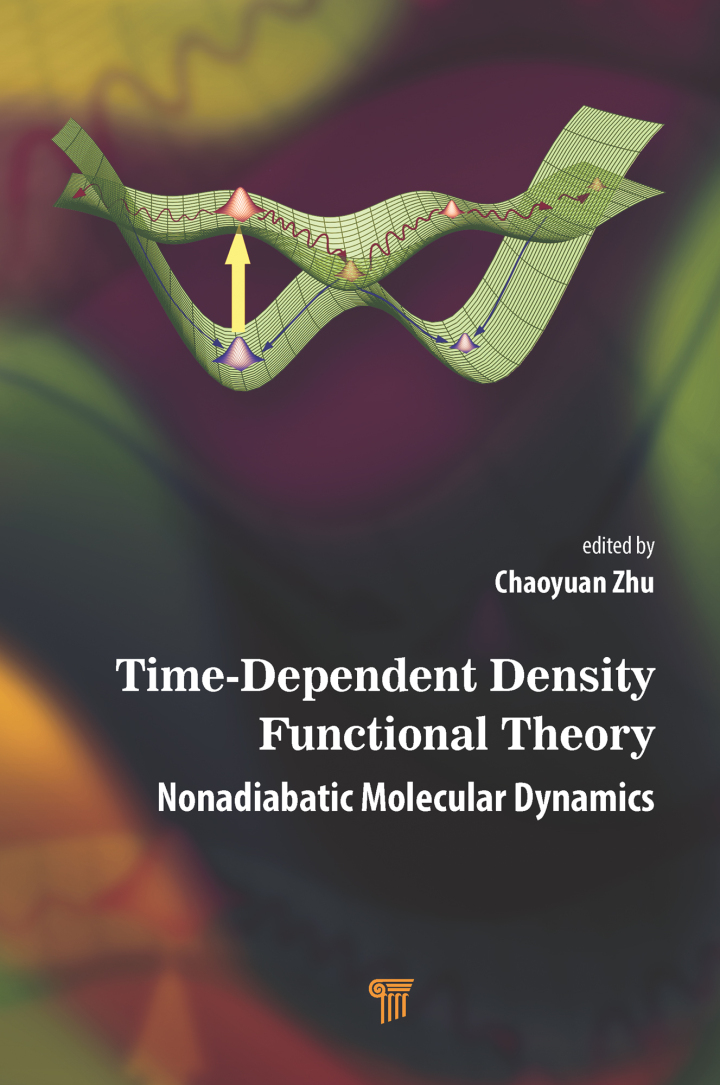
Time-Dependent Density Functional Theory – 1st Edition
Original price was: $199.95.$38.00Current price is: $38.00.
Author: Chaoyuan Zhu
Publisher: Jenny Stanford Publishing
Print ISBN: 9789814968423
Delivery Time: Within 4 hours
Copyright: 2023
500 in stock
- Save up to 60% by choosing our eBook
- High-quality PDF Format
- Lifetime & Offline Access
Time-Dependent Density Functional Theory 1st Edition
Grabbing your attention from the first page, Time-Dependent Density Functional Theory, 1st Edition by Chaoyuan Zhu delivers a clear, authoritative introduction to one of the fastest-growing tools in computational physics and chemistry. Whether you’re exploring electronic excitations, optical spectra, or ultrafast electron dynamics, this book positions you to master both the theory and practical thinking behind modern time-dependent DFT (TDDFT).
You’ll find lucid explanations of core concepts—time-dependent Kohn–Sham equations, linear-response formalisms, real-time propagation techniques—and how they connect to measurable properties in molecules, solids, and nanostructures. Carefully structured chapters guide readers from foundational principles to advanced applications, accompanied by intuitive derivations and conceptual diagrams that make complex ideas accessible without sacrificing rigor.
Packed with contemporary examples relevant to quantum chemistry, materials science, and condensed matter physics, this 1st edition helps bridge classroom learning and research practice. Researchers, graduate students, and industry scientists will appreciate the practical insights on modeling excited states, interpreting spectroscopic data, and applying TDDFT across diverse systems—from organic photovoltaics to two-dimensional materials.
Written in a professional yet engaging voice, Zhu’s book is ideal for an international audience—students and practitioners across North America, Europe, and Asia—seeking a dependable reference that’s both teachable and research-ready. Clear chapter summaries and recommended further reading enhance usability for course adoption or self-study.
For anyone serious about computational approaches to electronic dynamics, Time-Dependent Density Functional Theory, 1st Edition is an essential addition to your library—comprehensive, contemporary, and crafted to advance your research and understanding. Add it to your collection today.