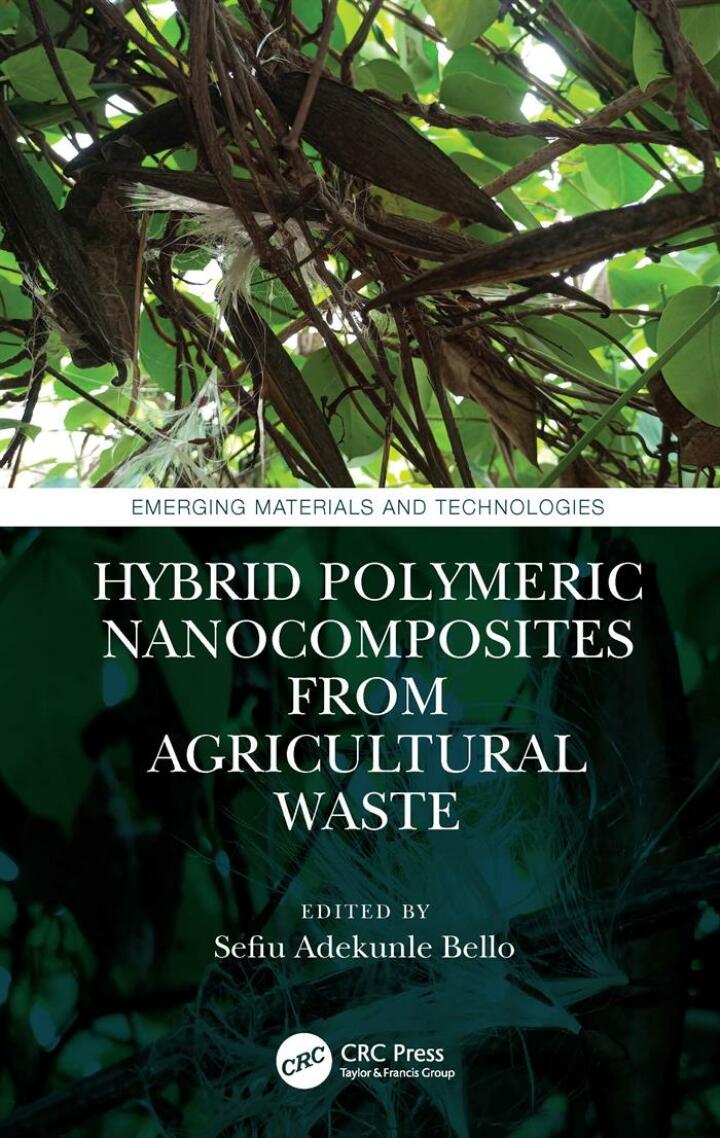
Hybrid Polymeric Nanocomposites from Agricultural Waste – 1st Edition
Original price was: $69.99.$38.00Current price is: $38.00.
Author:
Publisher: CRC Press
Print ISBN: 9780367772703
Delivery Time: Within 4 hours
Copyright: 2023
500 in stock
- Save up to 60% by choosing our eBook
- High-quality PDF Format
- Lifetime & Offline Access
Hybrid Polymeric Nanocomposites from Agricultural Waste 1st Edition
Hybrid Polymeric Nanocomposites from Agricultural Waste — 1st Edition
Discover a forward-looking resource that bridges green chemistry, materials science, and industrial application. This 1st Edition provides a comprehensive exploration of how agricultural residues — from rice husk and sugarcane bagasse to coconut coir and wheat straw — are transformed into high-performance hybrid polymeric nanocomposites. Ideal for researchers, engineers, graduate students, and industry professionals, the book addresses sustainable materials development for global markets, including Asia’s rice-producing regions, Latin America’s sugarcane belt, and Europe and North America’s circular-economy initiatives.
Packed with practical insights, the text examines processing techniques, nano-reinforcement strategies, and property enhancement methods that yield lightweight, cost-effective, and biodegradable alternatives to traditional composites. Read detailed comparisons of mechanical, thermal, and barrier properties, plus case studies highlighting applications in packaging, automotive components, construction materials, and agricultural technologies.
What sets this title apart is its blend of scientific rigor and real-world relevance: clear explanations of nanoparticle dispersion, interfacial compatibility, and hybridization methods are paired with implementation considerations for scale-up, supply-chain sourcing, and regional feedstock variability. The book also reviews lifecycle and environmental impacts, helping professionals design materials that meet regulatory and sustainability goals.
Whether you’re developing bio-based composites for product innovation or seeking to incorporate circular-economy practices into manufacturing, this edition delivers actionable knowledge and inspiration. Stay ahead in the rapidly evolving field of sustainable nanocomposites—add this essential reference to your library and transform agricultural waste into tomorrow’s high-performance materials.
Related Books
Technology & Engineering
Introduction to Discrete Event Simulation and Agent-based Modeling

Technology & Engineering
Fundamentals of Spacecraft Attitude Determination and Control – 1st Edition
Technology & Engineering
Proceedings of Emerging Trends and Technologies on Intelligent Systems