
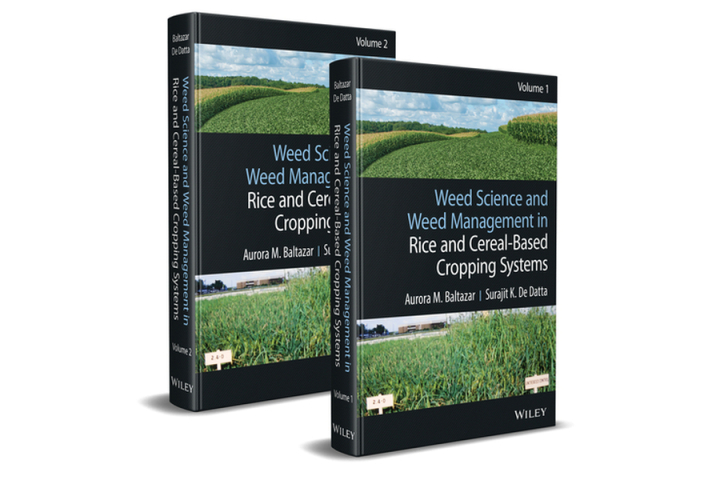
Weed Science and Weed Management in Rice and Cereal-Based Cropping Systems, 2 Volumes – 1st Edition
Original price was: $236.00.$38.00Current price is: $38.00.
Author: Aurora M. Baltazar; Surajit K. De Datta
Publisher: John Wiley & Sons P&T
Print ISBN: 9781119737568
Delivery Time: Within 4 hours
Copyright: 2023
500 in stock
- Save up to 60% by choosing our eBook
- High-quality PDF Format
- Lifetime & Offline Access
Weed Science and Weed Management in Rice and Cereal-Based Cropping Systems, 2 Volumes 1st Edition
Capture the future of sustainable crop production with Weed Science and Weed Management in Rice and Cereal-Based Cropping Systems, 2 Volumes — 1st Edition by Aurora M. Baltazar and Surajit K. De Datta. This authoritative two-volume set brings cutting-edge science to the field, offering a complete roadmap for managing weeds in rice and cereal systems across tropical and subtropical regions.
Discover evidence-based strategies that blend ecology, agronomy, and practical management. Detailed chapters cover weed biology, population dynamics, herbicide modes of action and resistance, cultural and mechanical controls, integrated weed management (IWM) approaches, and cost-effective options for smallholder and commercial farms. Regionally relevant case studies from South and Southeast Asia — including India, the Philippines, Bangladesh and neighboring countries — make this resource especially valuable for practitioners working in rice-dominant landscapes.
Designed for agronomists, weed scientists, extension agents, crop consultants, graduate students and progressive farmers, the volumes translate complex research into usable guidance. Learn how to reduce yield losses, delay herbicide resistance, optimize tillage and crop rotations, and implement environmentally sensitive practices that improve profitability and sustainability.
Enjoy clear diagrams, comparative tables, and step-by-step management frameworks that simplify decision-making in real-world cropping systems. Whether you’re developing integrated field plans, teaching crop protection, or updating policy and extension programs, this set is a practical reference and a long-term investment in healthier yields and resilient farming systems.
Ready to upgrade your agronomic library? Add Weed Science and Weed Management in Rice and Cereal-Based Cropping Systems to your collection and gain the tools needed to manage weeds effectively across rice and cereal landscapes.
Related Books





Technology & Engineering
Soft Computing in Condition Monitoring and Diagnostics of Electrical and Mechanical Systems
