
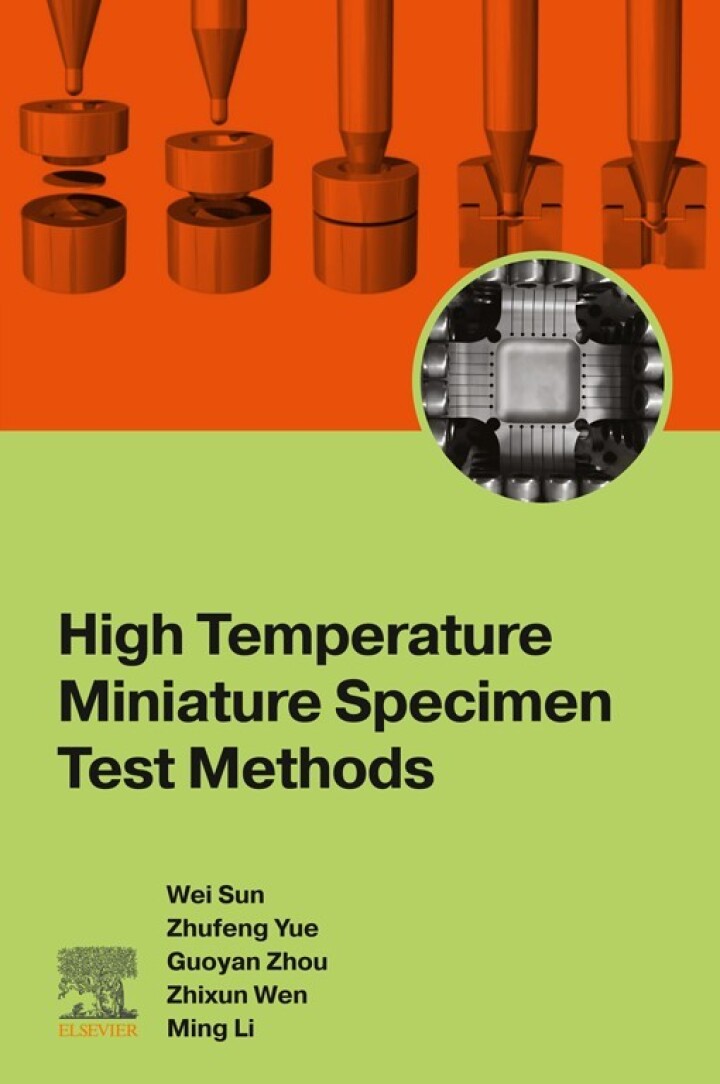
High Temperature Miniature Specimen Test Methods – 1st Edition
Original price was: $180.00.$38.00Current price is: $38.00.
Author: Wei Sun; Zhufeng Yue; Guoyan Zhou; Zhixun Wen; Ming Li
Publisher: Elsevier (S&T)
Print ISBN: 9780443218972
Delivery Time: Within 4 hours
Copyright: 2024
500 in stock
- Save up to 60% by choosing our eBook
- High-quality PDF Format
- Lifetime & Offline Access
High Temperature Miniature Specimen Test Methods 1st Edition
Grabs attention with clear relevance to engineers and researchers working on high-temperature materials. High Temperature Miniature Specimen Test Methods (1st Edition) by Wei Sun, Zhufeng Yue, Guoyan Zhou, Zhixun Wen, and Ming Li delivers a focused, practical guide to testing small-scale specimens under extreme thermal conditions—essential reading for anyone tackling materials performance where space, cost, or sample availability limit conventional testing.
Explains why miniature specimen testing matters today: accelerating materials qualification, reducing cost and waste, and enabling lifecycle assessments for components in power plants, aerospace, petrochemical, and nuclear industries. The authors combine academic rigor with hands-on experience to present standardized test procedures, experimental setups, and troubleshooting tips that yield reliable high-temperature data from micro-specimens.
Builds desire by outlining what you’ll gain: step-by-step methodologies for tensile, creep, fatigue, and fracture testing at elevated temperatures; guidance on specimen preparation, temperature control, and accurate data capture; plus interpretation strategies linking microstructural changes to mechanical behavior. Case studies and comparative analyses illustrate how miniature specimen results correlate with full-scale performance, helping labs in Asia, Europe, and North America improve testing efficiency and confidence.
Encourages action for a wide audience—materials scientists, mechanical engineers, lab managers, researchers, and graduate students—seeking a single authoritative reference on miniature high-temperature testing. Compact yet comprehensive, this 1st edition is a practical resource for setting up laboratory protocols, validating new alloys, or supporting regulatory compliance in high-temperature service environments.
Order your copy of High Temperature Miniature Specimen Test Methods to bring validated, cost-effective testing practices into your lab and advance your material qualification with confidence.
Related Books

Technology & Engineering
Critical Regimes of Two-Phase Flows with a Polydisperse Solid Phase

Technology & Engineering
Fundamentals of Spacecraft Attitude Determination and Control – 1st Edition


Technology & Engineering
Introduction to Discrete Event Simulation and Agent-based Modeling
Technology & Engineering
Mathematical Methods for Engineering and Science – 2nd Edition