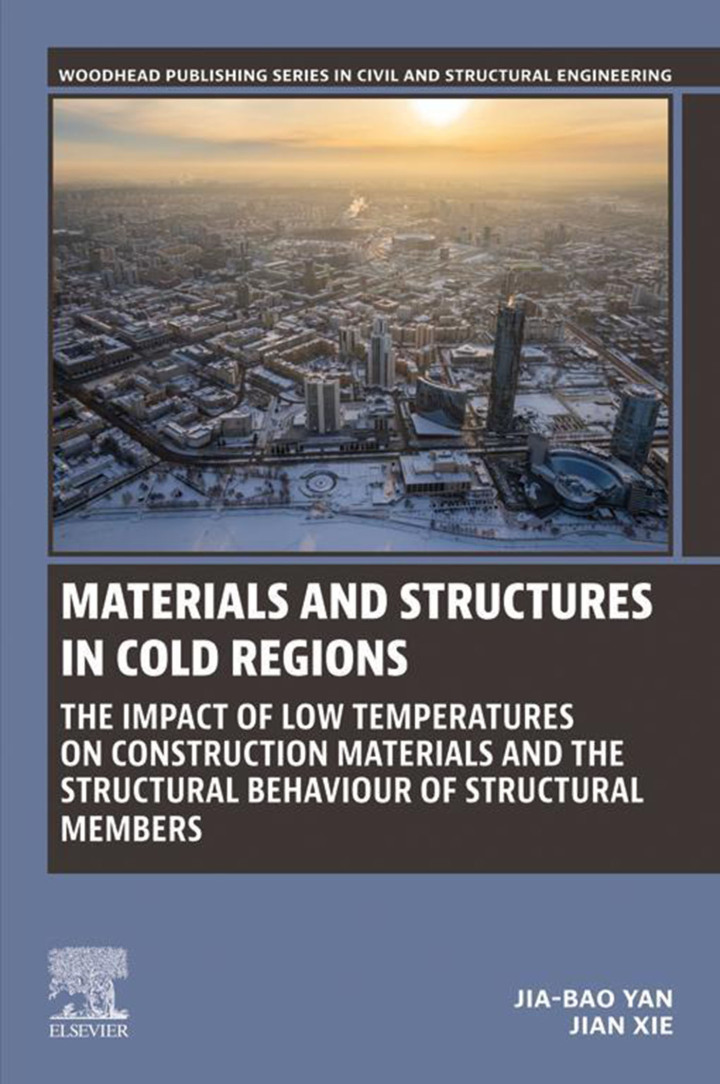
Materials and Structures in Cold Regions – 1st Edition
Original price was: $225.00.$38.00Current price is: $38.00.
Author: Jia-Bao Yan; Jian Xie
Publisher: Woodhead Publishing
Print ISBN: 9780443219320
Delivery Time: Within 4 hours
Copyright: 2024
500 in stock
- Save up to 60% by choosing our eBook
- High-quality PDF Format
- Lifetime & Offline Access
Materials and Structures in Cold Regions 1st Edition
Gripping and authoritative, Materials and Structures in Cold Regions, 1st Edition by Jia-Bao Yan and Jian Xie is an essential reference for anyone working where temperature, ice, and permafrost shape the built environment. This book immediately draws attention with real-world relevance for Arctic, Antarctic, subarctic and high-altitude projects—regions where standard design assumptions fail.
Inside, the authors bridge materials science and structural engineering with clear explanations of how low temperatures, freeze–thaw cycles, frost heave, thermal contraction, and permafrost degradation affect performance and durability. Case studies and design-focused analysis illuminate challenges faced by civil engineers, architects, contractors, and researchers in cold-climate construction. Practical discussions on testing methods, material selection, thermal protection, and mitigation strategies make complex concepts accessible without sacrificing technical rigor.
Readers will appreciate the book’s value for project risk reduction and improved lifecycle planning. Whether designing foundations on ice-rich soils, selecting durable concrete mixes for polar infrastructure, or assessing long-term stability in northern communities, this text equips professionals with evidence-based insights and actionable guidance. Its international perspective—covering polar regions, northern Europe, North America, Siberia, and high mountain environments—makes it geographically relevant for global practice.
For students pursuing cold regions engineering, researchers exploring permafrost dynamics, or decision-makers overseeing resilient infrastructure, this 1st Edition is a concise, practical companion. Clear figures, focused explanations, and an emphasis on applicability ensure it’s both an academic resource and a field-ready manual.
Secure your copy of Materials and Structures in Cold Regions, 1st Edition and bring proven expertise to every cold-climate project.