
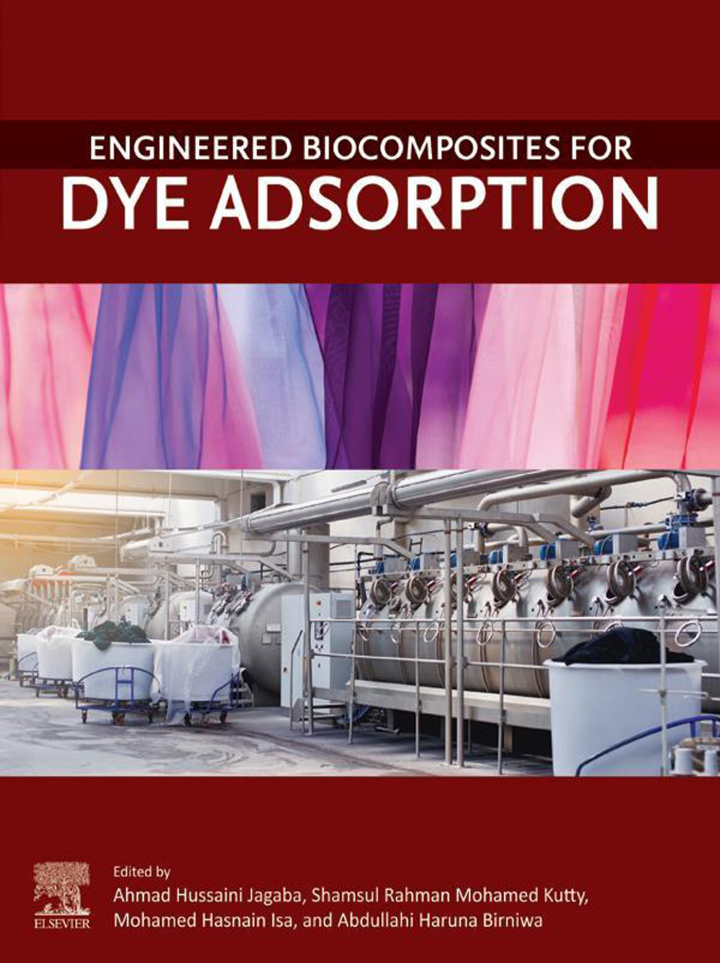
Engineered Biocomposites for Dye Adsorption
Original price was: $230.00.$38.00Current price is: $38.00.
Author: Ahmad Hussaini Jagaba
Publisher: Elsevier (S&T)
Print ISBN: 9780443298776
Delivery Time: Within 4 hours
Copyright: 2025
500 in stock
- Save up to 60% by choosing our eBook
- High-quality PDF Format
- Lifetime & Offline Access
Engineered Biocomposites for Dye Adsorption
Engineered Biocomposites for Dye Adsorption by Ahmad Hussaini Jagaba offers a timely, practical guide to designing sustainable adsorbent materials for removing dyes from industrial wastewater. Combining clear engineering principles with applied environmental science, this book captures attention from the first page by addressing one of the textile and manufacturing sectors’ most persistent pollution problems: efficient, low-cost dye adsorption.
Inside, readers will find an accessible yet rigorous exploration of biocomposite development—from raw biomass selection and chemical modification to fabrication, characterization, and performance evaluation. The author explains adsorption mechanisms, isotherm modeling, and kinetics in plain language while referencing instrumental techniques such as FTIR, SEM, XRD, and BET surface analysis. Case studies highlight laboratory-to-plant considerations, regeneration strategies, and real-world applications in textile hubs across South Asia, West Africa, and beyond.
Engineered for researchers, environmental engineers, graduate students, and industry practitioners, this volume emphasizes scalable solutions and sustainability. It shows how locally available agricultural residues can be transformed into high-performance adsorbents, cutting treatment costs and environmental impact. Practical chapters on process optimization, pilot-scale implementation, and regulatory implications make the book invaluable for anyone involved in wastewater treatment, environmental remediation, or sustainable materials development.
Whether you are developing a research project, upgrading treatment facilities, or seeking a concise reference on dye adsorption technologies, this book delivers expert insight and actionable direction. Enhance your library with a resource that bridges theory and practice—order your copy of Engineered Biocomposites for Dye Adsorption by Ahmad Hussaini Jagaba today and start turning waste biomass into effective, eco-friendly adsorbents.
Related Books
Technology & Engineering
Matlab: A Practical Introduction to Programming and Problem Solving – 3rd Edition

Technology & Engineering
Fundamentals of Spacecraft Attitude Determination and Control – 1st Edition


Technology & Engineering
Soft Computing in Condition Monitoring and Diagnostics of Electrical and Mechanical Systems