
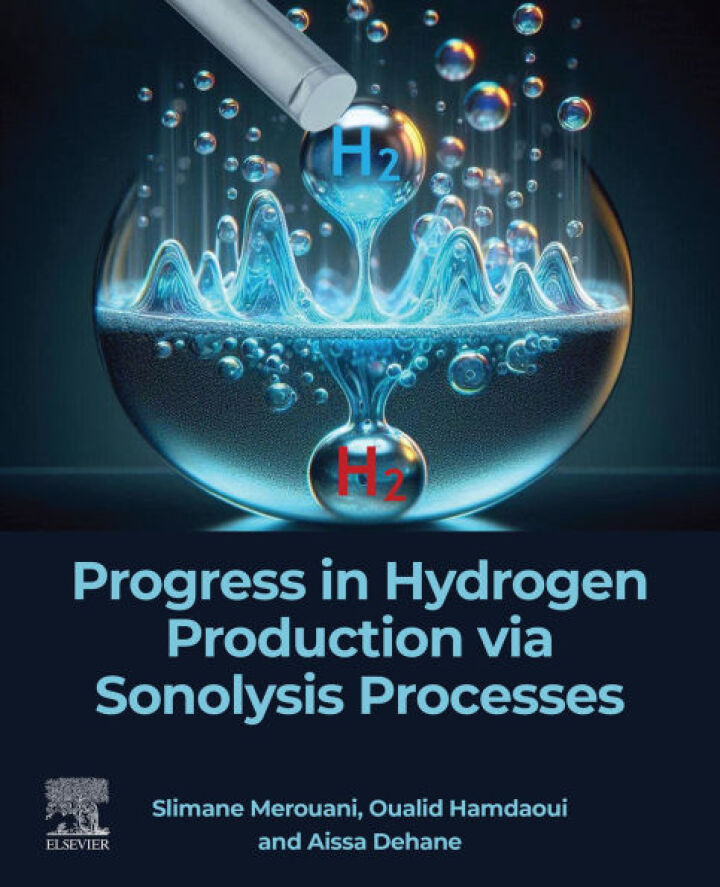
Progress in Hydrogen Production via Sonolysis Processes
Original price was: $220.00.$38.00Current price is: $38.00.
Author: Slimane Merouani; Oualid Hamdaoui; Aissa Dehane
Publisher: Elsevier (S&T)
Print ISBN: 9780443290176
Delivery Time: Within 4 hours
Copyright: 2026
500 in stock
- Save up to 60% by choosing our eBook
- High-quality PDF Format
- Lifetime & Offline Access
Progress in Hydrogen Production via Sonolysis Processes
Explore a cutting-edge volume that places sonolysis at the forefront of hydrogen production research. This authoritative book delivers a clear, research-driven perspective on acoustic cavitation, sonochemistry, and their role in sustainable H2 generation for industry and academia worldwide.
Combining theoretical foundations with experimental breakthroughs, the authors synthesize recent advances in sonolysis mechanisms, reactor design, process optimization, and scale-up challenges. Case studies and comparative analyses highlight how sonolytic water splitting integrates with renewable electricity, photocatalysis, and hybrid systems — of interest to researchers, engineers, and policy-makers in Europe, North America, Asia, and beyond.
Whether you’re developing green hydrogen projects, teaching advanced energy courses, or evaluating emerging technologies for industrial deployment, this book equips you with actionable insights. Learn practical approaches to maximize H2 yield, reduce energy input, and assess techno-economic viability. Rich in diagrams, data interpretation, and experimental protocols, it bridges lab-scale science and real-world application.
Add this essential reference to your library to stay current on sonolysis-driven hydrogen innovation. Ideal for research labs, graduate students, and energy professionals seeking reliable, peer-informed content.
Published by Elsevier (S&T), this book is a timely resource for the global energy transition toward sustainable hydrogen.
Related Books

Technology & Engineering
Introduction to Discrete Event Simulation and Agent-based Modeling